|
|
  Playing the Waiting Game
Posts: 2304
 
| On a closed FB forum a person asked how to easily remove bot eggs from her horses legs... All the normal stuff was recommended... BUT one thing that was mentioned, was that worming the horse in December would kill the eggs attached to the hair folicals. This is a new one to me, in my 50 years of owning horses I've not heard of this.
My opinion is that the eggs are attached to DEAD hair... so how is worming the horse going to get to the eggs to kill them. Wouldn't the wormer have to be already in the hair by the time the egg is layed???
Please comment! |
|
| |
|
Expert
Posts: 2685
 
| The only way I see that working is if the wormer makes the horse let go of some of the winter hair.... |
|
| |
|
 Lived to tell about it and will never do it again
Posts: 5409

| It's always been my understanding that the wormer kills the bot eggs that have already been digested into the horses system. I have always been told to wait until all the bot eggs are off the horse before you worm them so that they wont get reinfested after you worm them. |
|
| |
|
 Own It and Move On
Location: The edge of no where | euchee - 2014-11-17 8:49 PM It's always been my understanding that the wormer kills the bot eggs that have already been digested into the horses system. I have always been told to wait until all the bot eggs are off the horse before you worm them so that they wont get reinfested after you worm them.
^This.
Make sure that you get all the bot eggs off the horse and then use a wormer that kills the eggs they've got in their system. Many wormers are not effective against bots, read the labels and make sure to use one that kills the nasty boogers.
|
|
| |
|
Playing the Waiting Game
Posts: 2304
| MS2011 - 2014-11-18 8:16 AM euchee - 2014-11-17 8:49 PM It's always been my understanding that the wormer kills the bot eggs that have already been digested into the horses system. I have always been told to wait until all the bot eggs are off the horse before you worm them so that they wont get reinfested after you worm them. ^This.
Make sure that you get all the bot eggs off the horse and then use a wormer that kills the eggs they've got in their system. Many wormers are not effective against bots, read the labels and make sure to use one that kills the nasty boogers.
Well I'm glad you all agree with my thought process... HERE I thought Chemo brain had struck again
|
|
| |
|
 Swiffer PIcker Upper
Posts: 4015
Location: Four Corners Colorado | SO anyone have and ways to get them off that works? |
|
| |
|
Defense Attorney for The Horse

Location: Claremore, OK | suzy2qtee - 2014-11-17 7:46 PM
On a closed FB forum a person asked how to easily remove bot eggs from her horses legs... All the normal stuff was recommended... BUT one thing that was mentioned, was that worming the horse in December would kill the eggs attached to the hair folicals. This is a new one to me, in my 50 years of owning horses I've not heard of this.
My opinion is that the eggs are attached to DEAD hair... so how is worming the horse going to get to the eggs to kill them. Wouldn't the wormer have to be already in the hair by the time the egg is layed???
Please comment!
The wormer can't kill the bot eggs on the legs. It can only kill the bots that are attached in the horse's stomach.
The horse gets bots into his stomach by licking/grooming himself and making contact with the eggs on his legs. The warmth of his saliva opens the egg casing and the bot larvae travels down the horse's throat where it attaches to the stomach for the next phase of his life cycle. |
|
| |
|
 Veteran
Posts: 253
Location: EDGE OF INSANITY | equussynergy - 2014-11-18 10:44 AM
SO anyone have and ways to get them off that works?
this is what i use
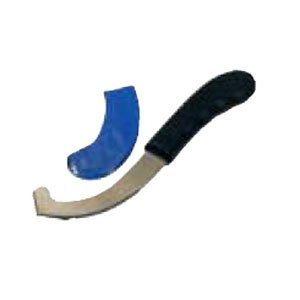 (bot knife.jpg) (bot knife.jpg)
Attachments
----------------
 bot knife.jpg (6KB - 190 downloads) bot knife.jpg (6KB - 190 downloads)
|
|
| |
|
 The Bling Princess
Posts: 3411
Location: North Dakota | equussynergy - 2014-11-18 9:44 AM SO anyone have and ways to get them off that works?
Without burning your horse, take hot water and pour it on the areas that the bot eggs are present and then scrape them off with the scraper doo dad. The hot water hatches them (supposedly) and then they are easier to scrape off. |
|
| |
|
Veteran
Posts: 253
Location: EDGE OF INSANITY | The bots at my house this year are SUPER bad!! Everyday, i scrape them off my boys. Anyone else think there are more this year than normal? We also have chicken houses that butt up to our pasture so i don't think that helps |
|
| |
|
 Expert
Posts: 3782
Location: Gainesville, TX | I scraped my girls legs with the bot knife and then wormed her with Equimax, effective against bots. |
|
| |
|
 Regular
Posts: 65
Location: south GA | The eyebrow shapers for people work great too, I normally pick them up from the dollar store or walmart for a couple bucks for a package of 4 or 5. |
|
| |
|
 Champ
Posts: 19623
Location: Peg-Leg Julia Grimm | I was just reading something about this a few weeks ago. The eggs that are laid on the horses hair hatch within 2 weeks of being laid. If they happen to get ingested then the wormer can kill them. After 2 weeks they are no longer a threat.
Ivermectin and Moxidectin are the only 2 wormers that can get bots. They not only get them in the stomach but can get them in the migration stage. The best time to de-worm for bots is in the winter months when they are actually inside the horse. The recommendation is to time de-worming for after the first frost (or after bots aren't around anymore), and in the early spring (before the bots pass out to continue their lifecycle).  |
|
| |
|
 Angel in a Sorrel Coat
Posts: 16030
Location: In a happy place | OregonBR - 2014-11-18 11:29 AM I was just reading something about this a few weeks ago. The eggs that are laid on the horses hair hatch within 2 weeks of being laid. If they happen to get ingested then the wormer can kill them. After 2 weeks they are no longer a threat.
Ivermectin and Moxidectin are the only 2 wormers that can get bots. They not only get them in the stomach but can get them in the migration stage. The best time to de-worm for bots is in the winter months when they are actually inside the horse. The recommendation is to time de-worming for after the first frost (or after bots aren't around anymore), and in the early spring (before the bots pass out to continue their lifecycle).
I have asked veterinarians this question for years and no one had an answer. My question still is if you see a yellow (egg) or whatever you call it on their leg then does that mean if the horse licks it will it go to their digestive system.
I am so anal about the eggs I scrape them off every day if I have to. I have seen pictures and real intestines also where worms have been attached and I can't stand the thought of my horses stomach looking like that. I know, silly me. |
|
| |
|
 Expert
Posts: 4121
Location: SE Louisiana | A grill brick works well. Wal-Mart has them.
 |
|
| |
|
Champ
Posts: 19623
Location: Peg-Leg Julia Grimm | sorrel horse ranch - 2014-11-18 9:41 AM OregonBR - 2014-11-18 11:29 AM I was just reading something about this a few weeks ago. The eggs that are laid on the horses hair hatch within 2 weeks of being laid. If they happen to get ingested then the wormer can kill them. After 2 weeks they are no longer a threat.
Ivermectin and Moxidectin are the only 2 wormers that can get bots. They not only get them in the stomach but can get them in the migration stage. The best time to de-worm for bots is in the winter months when they are actually inside the horse. The recommendation is to time de-worming for after the first frost (or after bots aren't around anymore), and in the early spring (before the bots pass out to continue their lifecycle).
http://www2.ca.uky.edu/entomology/entfacts/ef504.asp
Edited by OregonBR 2014-11-18 12:02 PM
|
|
| |
|
 Elite Veteran
Posts: 700
Location: Driving, Grooming, or Saddling for a Kid! | What he said! |
|
| |
|
Champ
Posts: 19623
Location: Peg-Leg Julia Grimm | Why can't I make links hot anymore? |
|
| |
|
Expert
Posts: 4121
Location: SE Louisiana | OregonBR - 2014-11-18 11:55 AM
Why can't I make links hot anymore?
Links don't show up hot if you are using the Rich Text Editor.. You can bounce back and forth tho and everything will stay as you post it. |
|
| |
|
Champ
Posts: 19623
Location: Peg-Leg Julia Grimm | komet. - 2014-11-18 9:57 AM OregonBR - 2014-11-18 11:55 AM Why can't I make links hot anymore? Links don't show up hot if you are using the Rich Text Editor.. You can bounce back and forth tho and everything will stay as you post it.
Thanks.  |
|
| |
|
 Expert
Posts: 1857
| sorrel horse ranch - 2014-11-18 11:41 AM
OregonBR - 2014-11-18 11:29 AM I was just reading something about this a few weeks ago. The eggs that are laid on the horses hair hatch within 2 weeks of being laid. If they happen to get ingested then the wormer can kill them. After 2 weeks they are no longer a threat.
Ivermectin and Moxidectin are the only 2 wormers that can get bots. They not only get them in the stomach but can get them in the migration stage. The best time to de-worm for bots is in the winter months when they are actually inside the horse. The recommendation is to time de-worming for after the first frost (or after bots aren't around anymore), and in the early spring (before the bots pass out to continue their lifecycle).
I am so anal about the eggs I scrape them off every day if I have to. I have seen pictures and real intestines also where worms have been attached and I can't stand the thought of my horses stomach looking like that. I know, silly me.
the larvae is inside the yellow egg, once the horse licks it and it feels the warmth it starts to come out and then gets ingested but the yellow egg will remain on the horse. So even after you worm and there are yellow eggs on the horse, doesn't necessarily mean that they are infected with bots. That's why they say wiping with a warm rag will get rid of them but you are still left with the lovely yellow dots! |
|
| |
|
Expert
Posts: 1857
| OregonBR - 2014-11-18 11:54 AM
sorrel horse ranch - 2014-11-18 9:41 AM OregonBR - 2014-11-18 11:29 AM I was just reading something about this a few weeks ago. The eggs that are laid on the horses hair hatch within 2 weeks of being laid. If they happen to get ingested then the wormer can kill them. After 2 weeks they are no longer a threat.
Ivermectin and Moxidectin are the only 2 wormers that can get bots. They not only get them in the stomach but can get them in the migration stage. The best time to de-worm for bots is in the winter months when they are actually inside the horse. The recommendation is to time de-worming for after the first frost (or after bots aren't around anymore), and in the early spring (before the bots pass out to continue their lifecycle). http://www2.ca.uky.edu/entomology/entfacts/ef504.asp
Here's another article
http://entnemdept.ufl.edu/creatures/livestock/horse_bot_fly.htm |
|
| |
|
Playing the Waiting Game
Posts: 2304
| FlyingJT - 2014-11-18 12:01 PM OregonBR - 2014-11-18 11:54 AM sorrel horse ranch - 2014-11-18 9:41 AM OregonBR - 2014-11-18 11:29 AM I was just reading something about this a few weeks ago. The eggs that are laid on the horses hair hatch within 2 weeks of being laid. If they happen to get ingested then the wormer can kill them. After 2 weeks they are no longer a threat.
Ivermectin and Moxidectin are the only 2 wormers that can get bots. They not only get them in the stomach but can get them in the migration stage. The best time to de-worm for bots is in the winter months when they are actually inside the horse. The recommendation is to time de-worming for after the first frost (or after bots aren't around anymore), and in the early spring (before the bots pass out to continue their lifecycle).
http://www2.ca.uky.edu/entomology/entfacts/ef504.asp
Here's another article http://entnemdept.ufl.edu/creatures/livestock/horse_bot_fly.htm[/qu...
I just read that it says that the larvae will "CRAWL" to the mouth... I did not know this... I thought it was all about the horse licking the yellow eggs... things that make you go HMMMM |
|
| |
|
 Witty Enough
Posts: 2954
Location: CTX | Yuck, didn't know they crawled..... Going to try the warm cloth and bot knife... nasty buggers. |
|
| |
|
Expert
Posts: 1857
| suzy2qtee - 2014-11-18 12:12 PM
FlyingJT - 2014-11-18 12:01 PM OregonBR - 2014-11-18 11:54 AM sorrel horse ranch - 2014-11-18 9:41 AM OregonBR - 2014-11-18 11:29 AM I was just reading something about this a few weeks ago. The eggs that are laid on the horses hair hatch within 2 weeks of being laid. If they happen to get ingested then the wormer can kill them. After 2 weeks they are no longer a threat.
Ivermectin and Moxidectin are the only 2 wormers that can get bots. They not only get them in the stomach but can get them in the migration stage. The best time to de-worm for bots is in the winter months when they are actually inside the horse. The recommendation is to time de-worming for after the first frost (or after bots aren't around anymore), and in the early spring (before the bots pass out to continue their lifecycle).
http://www2.ca.uky.edu/entomology/entfacts/ef504.asp
Here's another article http://entnemdept.ufl.edu/creatures/livestock/horse_bot_fly.htm[/qu...
I just read that it says that the larvae will "CRAWL" to the mouth... I did not know this... I thought it was all about the horse licking the yellow eggs... things that make you go HMMMM
I think it has to be really close to the mouth to actually crawl to it. I was thinking that the horse licks it or rubs on it and it gets on the muzzle and then crawls the rest of the way in.  |
|
| |
|
 Elite Veteran
Posts: 1118
Location: The South | I'll add another question...has anyone ever heard/read that spraying fly spray on them kills the larvae? My dad told me this and my first thought was "whatever", but now I'm wondering?
We have more on the horses now than we've ever had, I need to start scraping a little each day so it's not so overwhelming. |
|
| |
|
Expert
Posts: 1857
| LindsayJordan84 - 2014-11-18 12:34 PM
I'll add another question...has anyone ever heard/read that spraying fly spray on them kills the larvae? My dad told me this and my first thought was "whatever", but now I'm wondering?
We have more on the horses now than we've ever had, I need to start scraping a little each day so it's not so overwhelming.
I think it would, maybe depends on the type of insecticide you spry though... |
|
| |
|
 Expert
Posts: 3104
Location: Arkansas | If the fly spray has an insect growth regulator (IGR) it will kill the eggs. |
|
| |
|
 I Don't Brag
Posts: 6960
| I would like to know the actual FACTS about bot eggs. We were taught that it was the warmth and moisture of being licked that caused them to hatch. Just read an article a few months ago that stated that it the carbon dioxide breathed out by the horse when licking/scratching that actually causes them to hatch and to be careful when removing them as if you get too close and breathe on them, they can hatch AND YOU can get infected (something I have always wondered about).
I am anal about them and about had them eradicated before the Amish moved within a half mile.......sigh. I usually just pick them off one by one, holding the picked eggs in my hand so they do not fall to the ground and are able to be picked up by a grazing horse. I really HATE it when the retarded ones lay bazillions of eggs in their mane!!!!!After the first hard freeze and all chances of more eggs are gone, I worm with a boticide.
What I really want to know is the BEST time to worm after exposure. I think that article said two weeks after exposure. If wormed too soon, the larvae are not mature enough for the wormer to be effective. |
|
| |
|
Sock Snob
Posts: 3021
| I keep my horses on night shift putting then up in day until frost. Dont have bot eggs at all and have not in years. |
|
| |
|
 Texas Tenderheart
Posts: 6715
Location: Red Raiderland | My good mare had them a few years ago and when they scoped her I felt terrible! I still have the picture of her stomach full of bots. It was disgusting!  |
|
| |
|
Lived to tell about it and will never do it again
Posts: 5409
| I'm with Komet, the grill scraper or shedding block is what I find to be the easiest way to get rid of them. This is the worst year we have had for bot bees in a long time. |
|
| |
|
Expert
Posts: 1857
| Kaycee - 2014-11-18 8:09 PM
My good mare had them a few years ago and when they scoped her I felt terrible! I still have the picture of her stomach full of bots. It was disgusting!
Can we see the pics?? |
|
| |
|
Expert
Posts: 1280
Location: Texas | I use a Slick'n Easy block which is just like the grill blocks mentioned. My kids used to call the fart blocks because they stink :) I always use Zimectrin after Christmas to treat for any bots I missed. It's always worked here. |
|
| |