|
|
 Buttered Noodles Snacker
Posts: 4377
  
Location: NC | We recently bought a house this summer. It has a very flat area that I thought would be perfect for setting up my round pen and arena. Well now that we have moved in I realize that this area stays pretty wet. We have had an abnormally wet summer but still. I was wondering if there is anything I can do to be able to make this area ridable?? Can I haul in sand or would that be a waste? If I haul in sand should I till the ground up first? Or just dump and let horse work it into ground? OR do I need to pack with crusher run or crushed rock or something first?
I don't have a lot of money to put into it right off so the most economical option would be best. Thanks
| |
| | |
 Owner of a ratting catting machine
Posts: 2258
| Can you post pictures of a full 360 of the wet area? Or email? You might be in a bowl or a dip that is actually the base of a watershed. These areas often appear flat, silty, and splendid, but carry a pretty substantial amount of water during a rain storm. There's a few things that you can do to help, with the help of a bulldozer.
| |
| | |
Buttered Noodles Snacker
Posts: 4377
Location: NC | This is the best I have right now. The round pen is in the bottom corner between the rd and the driveway hidden behind the tree. the barrels are set up in the flat area between the horse trailer and the round pen...

| |
| | |
Owner of a ratting catting machine
Posts: 2258
| Warning: This is based on your one picture only!
Well, bad tidings being what they are: based on the angle of this photograph: you're right in a watershed. This means that the ditch that is running behind your horse trailer and building is the lowest point, and that's where all the run off water in the surrounding areas goes. See how the road is built up to a higher level than the rest of the area? This is the level that the engineers figured would keep the road dry and sound through all but flooding conditions. That culvert pictured further down is going to tell you a lot about how much water goes rolling through there. Is there a small culvert, or a big culvert? What this means to your arena dirt: this area can't drain/dry out quickly. The quality of dirt in these areas is probably pretty fine, silty stuff that's been washed there over the millennia. The water retention of this type of soil is pretty amazing, as you're finding out. It's not high enough to drain well by simple gravity, as all the area above it drains onto it as well.
Is that your house next to the horse trailer? Do you have flood insurance? I would be visiting the neighbors pronto to see how much water gets going through there with different levels of storms. I'm glad you were there through the summer rains, hopefully that's the most water you'll see and you're still not washed away!
Okay, but per your arena question:
Need more pictures, but I think you'd be pretty safe to say that to go all out and be an overachiever you need two things:
1: A berm protecting and diverting flow from the road away from you arena, round pen, horse trailer parking, and building. You'd be shocked at how much water runs off a paved road. This is why road ditches always have more grass/plants growing in them in dry years.
2: A built up base for your arena and round pen. I recommend good hard road base brought in to allow for a similar level as the road, and rolled in flat. This will be a LOT of material, depending on your grade and depth. There would be more material on the downhill side, allowing the area to stay level. Then your sand or whatever footing you'd like to bring in. This would also be a lot of material.
So, if you're on a budget:
You could hire in a bulldozer for a couple of days. You could work with the NRCS (county based soil/irrigation/water gurus) to help develop berms that will divert the water. The dozer could, at the same time, work to build up the place for your arena using existing material. Picture a raised flower bed, they're raised to allow drainage. Based on the layout (that I can't see), minimal dirtwork can be done, and a thick, heavy aggregate can be imported to help "soak" up the silt and moisture to make a good base. A dozer is a great tool that can spread, mix, and pack that stuff way faster than burning diesel in your farm tractor.
Don't forget:
Do contact NRCS to make sure that you're not in a protected watershed. State regulations and Army Corps of Engineers get really fussy about the changing of their creeks, watersheds, etc. You've got more rights and wiggle room for disturbance as a landowner than say, road construction or a pipeline crossing, but it's good to know what you can do without getting in trouble. A good surveyor can also be very helpful in designing a layout that is level, but will still drain. They can help you understand what you're up against as far as construction and material.
| |
| | |
Extreme Veteran
Posts: 464
| Your arena would be better suited on a rise. Getting heavy equipment in, is an option, but very expensive. A one bottom plow, might make a good enough furrough to divert water. Especially if you ran it over the same spot a few times. Running a subsoiler over the arena, would be cheap and easy. Breaking it deep will help water move down through the soil. I sub soil mine every spring. It helps a lot. | |
| | |
Buttered Noodles Snacker
Posts: 4377
Location: NC | classicpotatochip - 2014-12-16 9:33 AM Warning: This is based on your one picture only! Well, bad tidings being what they are: based on the angle of this photograph: you're right in a watershed. This means that the ditch that is running behind your horse trailer and building is the lowest point, and that's where all the run off water in the surrounding areas goes. See how the road is built up to a higher level than the rest of the area? This is the level that the engineers figured would keep the road dry and sound through all but flooding conditions. That culvert pictured further down is going to tell you a lot about how much water goes rolling through there. Is there a small culvert, or a big culvert? What this means to your arena dirt: this area can't drain/dry out quickly. The quality of dirt in these areas is probably pretty fine, silty stuff that's been washed there over the millennia. The water retention of this type of soil is pretty amazing, as you're finding out. It's not high enough to drain well by simple gravity, as all the area above it drains onto it as well. Is that your house next to the horse trailer? Do you have flood insurance? I would be visiting the neighbors pronto to see how much water gets going through there with different levels of storms. I'm glad you were there through the summer rains, hopefully that's the most water you'll see and you're still not washed away! Okay, but per your arena question: Need more pictures, but I think you'd be pretty safe to say that to go all out and be an overachiever you need two things: 1: A berm protecting and diverting flow from the road away from you arena, round pen, horse trailer parking, and building. You'd be shocked at how much water runs off a paved road. This is why road ditches always have more grass/plants growing in them in dry years. 2: A built up base for your arena and round pen. I recommend good hard road base brought in to allow for a similar level as the road, and rolled in flat. This will be a LOT of material, depending on your grade and depth. There would be more material on the downhill side, allowing the area to stay level. Then your sand or whatever footing you'd like to bring in. This would also be a lot of material. So, if you're on a budget: You could hire in a bulldozer for a couple of days. You could work with the NRCS (county based soil/irrigation/water gurus) to help develop berms that will divert the water. The dozer could, at the same time, work to build up the place for your arena using existing material. Picture a raised flower bed, they're raised to allow drainage. Based on the layout (that I can't see), minimal dirtwork can be done, and a thick, heavy aggregate can be imported to help "soak" up the silt and moisture to make a good base. A dozer is a great tool that can spread, mix, and pack that stuff way faster than burning diesel in your farm tractor. Don't forget: Do contact NRCS to make sure that you're not in a protected watershed. State regulations and Army Corps of Engineers get really fussy about the changing of their creeks, watersheds, etc. You've got more rights and wiggle room for disturbance as a landowner than say, road construction or a pipeline crossing, but it's good to know what you can do without getting in trouble. A good surveyor can also be very helpful in designing a layout that is level, but will still drain. They can help you understand what you're up against as far as construction and material.
This is what I was afraid of... :-( luckily that is not our house but just a garage. our house is on top of the hill. The building has been there a LONG time so I guess is ok under most conditions though a local did say it was flooded during a big hurricane in the late 70's... but it's still there. I could maybe find a spot on top of the hill where it drains to put the round pen but its not as level. We are first time home owners and did not know what to look for or question. We thought the creek was cute :-/..... our ignorance is obvious. I hate to have that much room wasted, especially since we only have 5 acres, really need to be able use it all.
Do you guys have any tips grass management in wet areas like this to use as pasture during dry month?
| |
| | |
Elite Veteran
Posts: 1034

| You might have an easier time cutting away some of the hillside with a back hoe and making a short retaining wall to get a level arena on the hill. Back fill with decomposed granite or similar and sand on top, and the water should drain fairly well. | |
| | |
 Expert
Posts: 1392
Location: Central Texas | HorsesNHarleys - 2014-12-16 10:54 AM classicpotatochip - 2014-12-16 9:33 AM Warning: This is based on your one picture only! Well, bad tidings being what they are: based on the angle of this photograph: you're right in a watershed. This means that the ditch that is running behind your horse trailer and building is the lowest point, and that's where all the run off water in the surrounding areas goes. See how the road is built up to a higher level than the rest of the area? This is the level that the engineers figured would keep the road dry and sound through all but flooding conditions. That culvert pictured further down is going to tell you a lot about how much water goes rolling through there. Is there a small culvert, or a big culvert? What this means to your arena dirt: this area can't drain/dry out quickly. The quality of dirt in these areas is probably pretty fine, silty stuff that's been washed there over the millennia. The water retention of this type of soil is pretty amazing, as you're finding out. It's not high enough to drain well by simple gravity, as all the area above it drains onto it as well. Is that your house next to the horse trailer? Do you have flood insurance? I would be visiting the neighbors pronto to see how much water gets going through there with different levels of storms. I'm glad you were there through the summer rains, hopefully that's the most water you'll see and you're still not washed away! Okay, but per your arena question: Need more pictures, but I think you'd be pretty safe to say that to go all out and be an overachiever you need two things: 1: A berm protecting and diverting flow from the road away from you arena, round pen, horse trailer parking, and building. You'd be shocked at how much water runs off a paved road. This is why road ditches always have more grass/plants growing in them in dry years. 2: A built up base for your arena and round pen. I recommend good hard road base brought in to allow for a similar level as the road, and rolled in flat. This will be a LOT of material, depending on your grade and depth. There would be more material on the downhill side, allowing the area to stay level. Then your sand or whatever footing you'd like to bring in. This would also be a lot of material. So, if you're on a budget: You could hire in a bulldozer for a couple of days. You could work with the NRCS (county based soil/irrigation/water gurus) to help develop berms that will divert the water. The dozer could, at the same time, work to build up the place for your arena using existing material. Picture a raised flower bed, they're raised to allow drainage. Based on the layout (that I can't see), minimal dirtwork can be done, and a thick, heavy aggregate can be imported to help "soak" up the silt and moisture to make a good base. A dozer is a great tool that can spread, mix, and pack that stuff way faster than burning diesel in your farm tractor. Don't forget: Do contact NRCS to make sure that you're not in a protected watershed. State regulations and Army Corps of Engineers get really fussy about the changing of their creeks, watersheds, etc. You've got more rights and wiggle room for disturbance as a landowner than say, road construction or a pipeline crossing, but it's good to know what you can do without getting in trouble. A good surveyor can also be very helpful in designing a layout that is level, but will still drain. They can help you understand what you're up against as far as construction and material. This is what I was afraid of... :-( luckily that is not our house but just a garage. our house is on top of the hill. The building has been there a LONG time so I guess is ok under most conditions though a local did say it was flooded during a big hurricane in the late 70's... but it's still there. I could maybe find a spot on top of the hill where it drains to put the round pen but its not as level. We are first time home owners and did not know what to look for or question. We thought the creek was cute :-/..... our ignorance is obvious. I hate to have that much room wasted, especially since we only have 5 acres, really need to be able use it all.
Do you guys have any tips grass management in wet areas like this to use as pasture during dry month?
We made the same mistake many years ago. We also thought the creek was cool. We were in our house for several years before we got a really super rainy year and discovered what our cute creek could really do. The flood picture needs no explanation. The pic with the horse....see the green pipe fence? Now look at the flood picture see same green posts. LOL and a picture of same creek on a normal day.
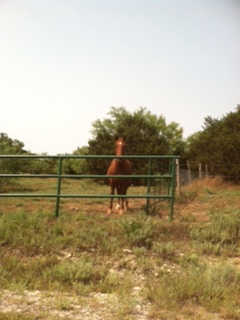 (PRECIFENCE.JPG) (PRECIFENCE.JPG)
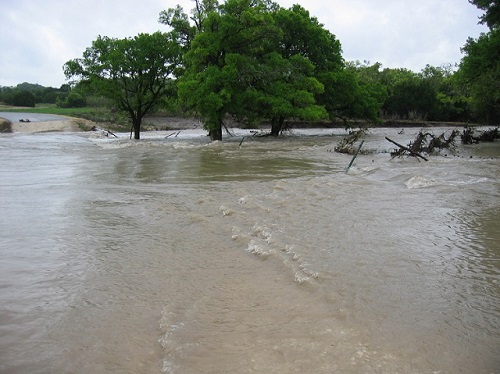 (1floodRESIZED.jpg) (1floodRESIZED.jpg)
Attachments
----------------
 CREEK.JPEG (90KB - 244 downloads) CREEK.JPEG (90KB - 244 downloads)
PRECIFENCE.JPG (46KB - 216 downloads)
1floodRESIZED.jpg (81KB - 234 downloads)
| |
| | |
Buttered Noodles Snacker
Posts: 4377
Location: NC | GraciousLegacy - 2014-12-16 3:42 PM HorsesNHarleys - 2014-12-16 10:54 AM classicpotatochip - 2014-12-16 9:33 AM Warning: This is based on your one picture only! Well, bad tidings being what they are: based on the angle of this photograph: you're right in a watershed. This means that the ditch that is running behind your horse trailer and building is the lowest point, and that's where all the run off water in the surrounding areas goes. See how the road is built up to a higher level than the rest of the area? This is the level that the engineers figured would keep the road dry and sound through all but flooding conditions. That culvert pictured further down is going to tell you a lot about how much water goes rolling through there. Is there a small culvert, or a big culvert? What this means to your arena dirt: this area can't drain/dry out quickly. The quality of dirt in these areas is probably pretty fine, silty stuff that's been washed there over the millennia. The water retention of this type of soil is pretty amazing, as you're finding out. It's not high enough to drain well by simple gravity, as all the area above it drains onto it as well. Is that your house next to the horse trailer? Do you have flood insurance? I would be visiting the neighbors pronto to see how much water gets going through there with different levels of storms. I'm glad you were there through the summer rains, hopefully that's the most water you'll see and you're still not washed away! Okay, but per your arena question: Need more pictures, but I think you'd be pretty safe to say that to go all out and be an overachiever you need two things: 1: A berm protecting and diverting flow from the road away from you arena, round pen, horse trailer parking, and building. You'd be shocked at how much water runs off a paved road. This is why road ditches always have more grass/plants growing in them in dry years. 2: A built up base for your arena and round pen. I recommend good hard road base brought in to allow for a similar level as the road, and rolled in flat. This will be a LOT of material, depending on your grade and depth. There would be more material on the downhill side, allowing the area to stay level. Then your sand or whatever footing you'd like to bring in. This would also be a lot of material. So, if you're on a budget: You could hire in a bulldozer for a couple of days. You could work with the NRCS (county based soil/irrigation/water gurus) to help develop berms that will divert the water. The dozer could, at the same time, work to build up the place for your arena using existing material. Picture a raised flower bed, they're raised to allow drainage. Based on the layout (that I can't see), minimal dirtwork can be done, and a thick, heavy aggregate can be imported to help "soak" up the silt and moisture to make a good base. A dozer is a great tool that can spread, mix, and pack that stuff way faster than burning diesel in your farm tractor. Don't forget: Do contact NRCS to make sure that you're not in a protected watershed. State regulations and Army Corps of Engineers get really fussy about the changing of their creeks, watersheds, etc. You've got more rights and wiggle room for disturbance as a landowner than say, road construction or a pipeline crossing, but it's good to know what you can do without getting in trouble. A good surveyor can also be very helpful in designing a layout that is level, but will still drain. They can help you understand what you're up against as far as construction and material. This is what I was afraid of... :-( luckily that is not our house but just a garage. our house is on top of the hill. The building has been there a LONG time so I guess is ok under most conditions though a local did say it was flooded during a big hurricane in the late 70's... but it's still there. I could maybe find a spot on top of the hill where it drains to put the round pen but its not as level. We are first time home owners and did not know what to look for or question. We thought the creek was cute :-/..... our ignorance is obvious. I hate to have that much room wasted, especially since we only have 5 acres, really need to be able use it all.
Do you guys have any tips grass management in wet areas like this to use as pasture during dry month?
oh WOW !!!! Now I am scared !!!! Now I am scared .... Hope we don't have that happen.... .... Hope we don't have that happen.... | |
| | |
Buttered Noodles Snacker
Posts: 4377
Location: NC | bump | |
| |
|