Posted 2015-08-13 12:18 AM Subject: Right way to turn a horse using reins
Location: Texas
Hello, so my moms friend who's done english all her life went out with us to my lesson. The trainer got hurt so my moms friend sorta took over the lesson for a bit. We were working on turning the horse and the friend tells me to use my fingers to turn it not actually pull the reins the way I want it to go. So which way is the right way to turn? Sorry if this is a stupid question but I've just pulled all the other times I rode.
Posted 2015-08-13 12:34 AM Subject: RE: Right way to turn a horse using reins
Take a Picture
Posts: 12842
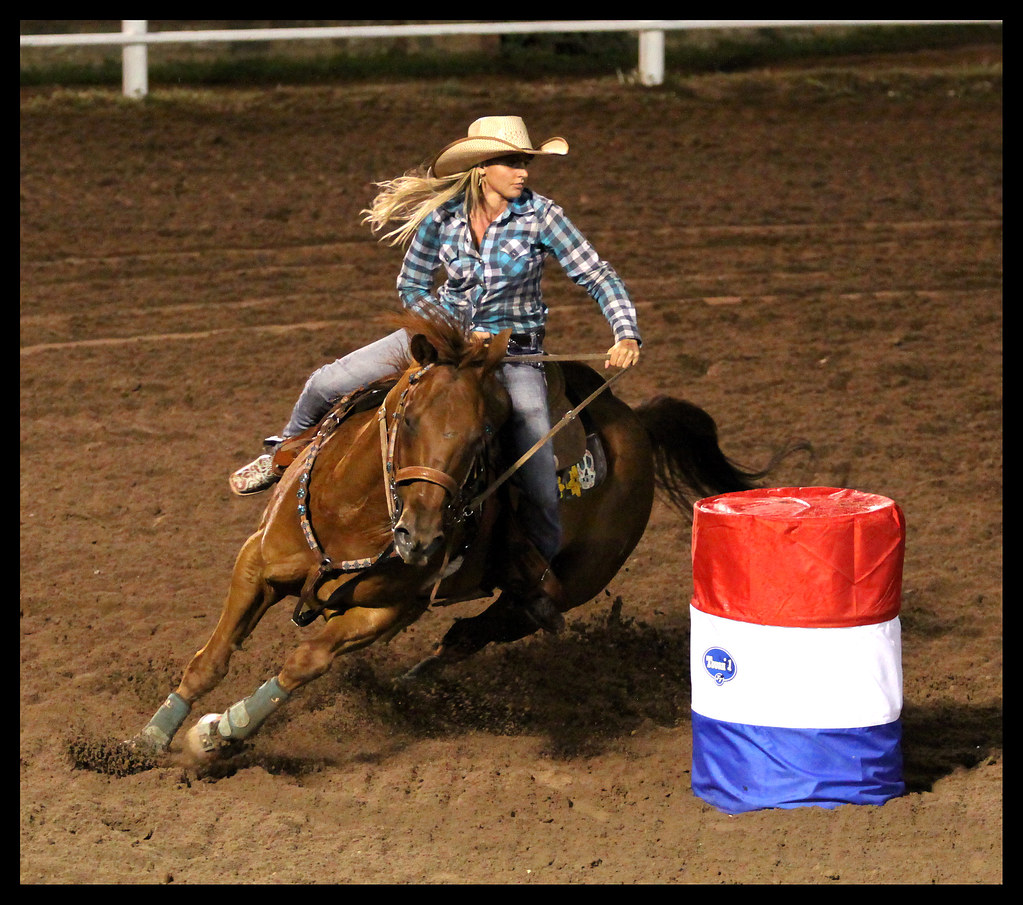
It really depends on what discipline you are riding. I assume you are riding a barrel horse. Everyone around here teaches their horse to give its head and bend its neck when we pull straight back to your belt buckle. You have to slide your hand down the rein to do this . Most of us ride with our legs too so if you are moving forward and you pull the rein back toward your belt buckle and get your leg on that same side, the horse is going to turn in that direction. So I guess we turn by sliding the hand down the rein and pulling straight back. Look at barrel racing pictures of winning horses and look where those peoples' hands are.
Posted 2015-08-13 6:27 AM Subject: RE: Right way to turn a horse using reins
Expert
Posts: 1367 Location: mi
It really depends on how your horse is trained. Once they are broke in the face then just a finger movement and a slight leg cue should get them to go where you are asking. Heck the really broke ones will turn with just a slight twist of your hips.
Posted 2015-08-13 8:58 AM Subject: RE: Right way to turn a horse using reins
Expert
Posts: 3782 Location: Gainesville, TX
There are three methods to using the reins in terms of 'pull.'
Open direct rein--involves pulling directly on the corner of a horse's mouth and usually pulling 'out' towards the direction you want to go. Don't pull down. Should always be paired with with pressure from the outside leg first (ie you should press your right leg into your horse to encourage them to move away from the pressure and turn left). This method is reserved really for very young horses who are just learning directions. Beginning riders or unbalanced ones also tend to do this.
Closed direct rein--involves pulling back or up (usually slightly up) on the inside rein for the direction you want to go. You can see Ed Wright push this method quite a bit in his clinic videos on youtube. Again, pulls directly on the side of the horse's mouth in the direction you want to go and involves outside leg pressure.
Indirect rein (neck rein)--this involves a horse that only needs slight pressure against the side of the neck. The horse should turn away from the pressure. So instead of pulling right and they turn right, you put the left rein against the left side of the neck and they move away and turn right. Again it will involve pressure from your feet first. Well broke western horses rely primarily on this method.
Most barrel horses respond to a closed direct rein in the pattern. Outside of the pattern they may also neck rein. Feet pressure can also change over time from just asking one to turn with pressure from the outside foot to asking them to move their shoulder over with inside leg pressure and keep their hind end tucked under them with the outside leg pressing further back on the horse's side.
In terms of the amount of pressure applied to the reins, yes, fingertips is best as versus close fisting the entire rein and jerking them around. You should always start by asking with very light pressure (like just your outside foot and body position) and then add more leg and then up your rein pressure gradually. As soft as you can be, as firm as you to be.
Around a barrel with open direct rein (notice the pull out):
Around a barrel with closed direct rein (notice the pull up):
English style of holding reins under contact:
For neck reining:
ETA: all pictures, except neck reining assume you are riding with a single looped rein, not split reins. That's a whole 'nother kettle of fish, not in terms of pull but in terms of finger positions, etc.
 Right way to turn a horse using reins