|
|
 Some Kind of Trouble
Posts: 4430
  
| I searched some old threads, but have a couple of questions.. has anyone had easy keepers with EPM? I see weightloss is a top symptom, but that would definetly not be the case for this horse. Is there anything you can do for a horse you suspect may have EPM to maybe give you a better idea or is a spinal tap worth doing when you're really not sure? |
|
| |
|
Expert
Posts: 3514
 
| It won't hurt to treat them. A lot of trainers especially cutters treat all new horses and horses they are putting into training. Re Balance is a great product. And there is herbs that will work. But you need to treat 90 days. All horses are exposed. It's just when their immunity is compromised,stress will cause the Protozoa to break the blood membrane barrier. |
|
| |
|
 Expert
Posts: 1718
Location: Southeast Louisiana | My easy keeper never did lose weight. She just looked stiff when she walked. The vet did a thing where she pulled the horse's tail on one side then the other. You could see she definitely had weakness on one side.
I couldn't find exactly what I wanted in an internet search for a video to show what the vet did, but there are a ton on YouTube if you search for diagnosing epm in horses.
Oh, and if you use the medication called Rebalance, they will gain weight with it. Mine got too fat!
eta: we did the blood test for the titers to confirm.
Edited by Nita 2016-12-29 11:16 AM
|
|
| |
|
Elite Veteran
Posts: 975
Location: The barn...where else? SW Missouri | Our easy keeper did not lose weight at all. She was stumbling and tripping. Really bad when you rode her. Normally she really walks out and is ready to go, but started lagging behind and almost seemed lazy and sluggish. Not like her at all. She used to race up to the barn for her breakfast and supper and mom said you know she just walks to the barn and seems unenthused about her grain. We used Pathogenes for testing and treatment. She was back to herself in no time at all after treatment. We saw a difference in her just a few days into the treatment. Came running to barn bucking like a maniac. We have treated 2 with great results. Have also had friends treat with great results. |
|
| |
|
Some Kind of Trouble
Posts: 4430
| RunNbarrels - 2016-12-29 10:51 AM Our easy keeper did not lose weight at all. She was stumbling and tripping. Really bad when you rode her. Normally she really walks out and is ready to go, but started lagging behind and almost seemed lazy and sluggish. Not like her at all. She used to race up to the barn for her breakfast and supper and mom said you know she just walks to the barn and seems unenthused about her grain. We used Pathogenes for testing and treatment. She was back to herself in no time at all after treatment. We saw a difference in her just a few days into the treatment. Came running to barn bucking like a maniac. We have treated 2 with great results. Have also had friends treat with great results.
Can you explain more about the treatment you used?
This is an easy keeper, very sluggish and lazy, reluctant to free up at all. Overly tight through his whole hind end, just doesn't travel right to me, but doesn't really trip or anything severe. Chiro thought saddle fit, but haven't really gotten any improvement and he hasn't even been ridden in a couple months. |
|
| |
|
 Take a Picture
Posts: 12842

| Every horse has different symptoms. We affectionately call my horse Lardo. What I noticed on him was muscle deterioration on the top right croup area. Three vets missed it when I was telling them I thought he had EPM. |
|
| |
|
  Whack and Roll
Posts: 6342
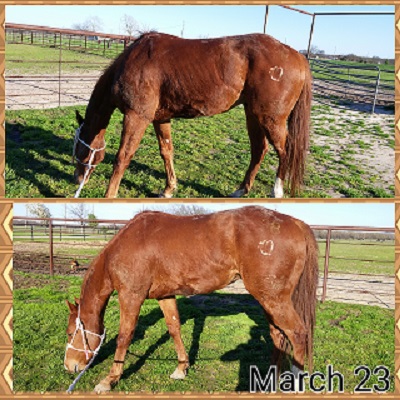
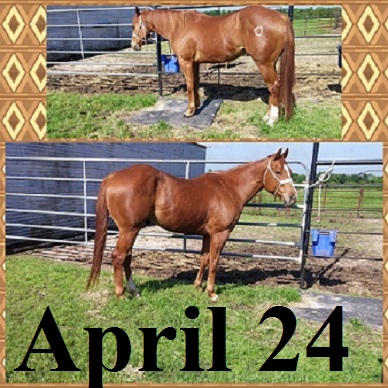
Location: NE Texas | Here are a couple of interesting articles regarding EPM and other diseases we deal with in our horses that are diffiuclt to manage and relapse often. If you will give this program a chance, you will not have to deal with these issues or relapses any longer. Believe me, I fought things similar to this for years with my gelding until it got to a point it was no longer manageable through medications. Started the Total Support and Immune & Repair and used that combinate for 90 days, then I just maintain almost year round with the Total Support. I do add in the Immune & Repair during August and September as a preventive and trying to be proactive instead of reactive. Just know that the more replases you deal with, the more damage neurologically is being done, and the less change for full recovery you have. Take the time to read these articles and give this program and the Cur-Ost products a try. I can assure you that you will not be disappointed. Saved my horse's life when I was advised there was nothing more we could do for him!
https://www.nouvelleresearch.com/index.php/articles/400-lyme-anaplasmosis-epm-in-the-horse-relapses-thoughts-and-theories
https://www.nouvelleresearch.com/index.php/articles/364-epm-and-the-immune-system-a-clinical-perspective
 (PhotoGrid_1430245246911.jpg) (PhotoGrid_1430245246911.jpg)
 (PhotoGrid_1430065070482.jpg) (PhotoGrid_1430065070482.jpg)
Attachments
----------------
 PhotoGrid_1430245246911.jpg (93KB - 184 downloads) PhotoGrid_1430245246911.jpg (93KB - 184 downloads)
PhotoGrid_1430065070482.jpg (86KB - 181 downloads)
|
|
| |
|
 Namesless in BHW
Posts: 10368
Location: At the race track with Ah Dee Ohs | Herbie - 2016-12-29 2:26 PM Here are a couple of interesting articles regarding EPM and other diseases we deal with in our horses that are diffiuclt to manage and relapse often. If you will give this program a chance, you will not have to deal with these issues or relapses any longer. Believe me, I fought things similar to this for years with my gelding until it got to a point it was no longer manageable through medications. Started the Total Support and Immune & Repair and used that combinate for 90 days, then I just maintain almost year round with the Total Support. I do add in the Immune & Repair during August and September as a preventive and trying to be proactive instead of reactive. Just know that the more replases you deal with, the more damage neurologically is being done, and the less change for full recovery you have. Take the time to read these articles and give this program and the Cur-Ost products a try. I can assure you that you will not be disappointed. Saved my horse's life when I was advised there was nothing more we could do for him!
https://www.nouvelleresearch.com/index.php/articles/400-lyme-anaplasmosis-epm-in-the-horse-relapses-thoughts-and-theories
https://www.nouvelleresearch.com/index.php/articles/364-epm-and-the-immune-system-a-clinical-perspective
 |
|
| |
|
Expert
Posts: 3514
| I didn't know there was anything in Curost that killed the Protozoa? |
|
| |
|
Elite Veteran
Posts: 926
| I've had 4 horses with EPM. We live in an area where some folks just routinely treat for it because EPM is so common. 2 were over 10 years ago before we had as much info as we do today. The last two I caught very early, so treatment was early and successful.
My suggestion is watch your horse and how they travel and look for any sign of something amiss. One of mine really always sat and turned, even when running and playing in the pasture. I started to notice he didn't do that any longer, his back end just sort of drifted along and he wasn't using his back legs like he usually did.
There are several signs that vets use, one is the tail pull. If they're sound, they will resist that and their butt may sway a bit, but they keep moving forward. With EPM you'll be able to pull them off a straight line and see an irregular sway, like they're not really sure where that backend is. The other is to tilt their hind foot on their toe, like they would when they rest that back foot. EPM horses won't know where the foot is and they will leave their foot cocked. Normal horses will set their foot back like it should be.
I always err on the side of caution if I suspect anything, we go check it. The earlier you see it, you won't have the wasting or top line loss that you will if it goes unchecked. Good luck.
|
|
| |
|
Some Kind of Trouble
Posts: 4430
| chicks2 - 2016-12-29 5:03 PM I've had 4 horses with EPM. We live in an area where some folks just routinely treat for it because EPM is so common. 2 were over 10 years ago before we had as much info as we do today. The last two I caught very early, so treatment was early and successful. My suggestion is watch your horse and how they travel and look for any sign of something amiss. One of mine really always sat and turned, even when running and playing in the pasture. I started to notice he didn't do that any longer, his back end just sort of drifted along and he wasn't using his back legs like he usually did. There are several signs that vets use, one is the tail pull. If they're sound, they will resist that and their butt may sway a bit, but they keep moving forward. With EPM you'll be able to pull them off a straight line and see an irregular sway, like they're not really sure where that backend is. The other is to tilt their hind foot on their toe, like they would when they rest that back foot. EPM horses won't know where the foot is and they will leave their foot cocked. Normal horses will set their foot back like it should be. I always err on the side of caution if I suspect anything, we go check it. The earlier you see it, you won't have the wasting or top line loss that you will if it goes unchecked. Good luck.
Do you just do a blood test? I have read yes/no on relying on the blood test alone. He resists with the tail test, so it may not be EPM, I'm just not sure what else it may be. |
|
| |
|
Elite Veteran
Posts: 975
Location: The barn...where else? SW Missouri | Dodge629 - 2016-12-29 1:30 PM
RunNbarrels - 2016-12-29 10:51 AM Our easy keeper did not lose weight at all. She was stumbling and tripping. Really bad when you rode her. Normally she really walks out and is ready to go, but started lagging behind and almost seemed lazy and sluggish. Not like her at all. She used to race up to the barn for her breakfast and supper and mom said you know she just walks to the barn and seems unenthused about her grain. We used Pathogenes for testing and treatment. She was back to herself in no time at all after treatment. We saw a difference in her just a few days into the treatment. Came running to barn bucking like a maniac. We have treated 2 with great results. Have also had friends treat with great results.
Can you explain more about the treatment you used?
This is an easy keeper, very sluggish and lazy, reluctant to free up at all. Overly tight through his whole hind end, just doesn't travel right to me, but doesn't really trip or anything severe. Chiro thought saddle fit, but haven't really gotten any improvement and he hasn't even been ridden in a couple months.
Pathogenes.com is the website for the company. We sent a tube of blood for each of our horses and they check the titers. I agree with Herbie on Cur - Ost products. My mare is on it in the summer when I'm hauling and riding a lot. No relapses for her or my moms mare. |
|
| |
|
Elite Veteran
Posts: 926
| Frankly no. The blood test is only about 50/50 when you balance the potential false postive and the potential false negative. I have acted on clinical evidence based on what I described. When in doubt, treat.
We are all tuned in to 'it must be a test'. But, unless you do a spinal tap, which is expensive, and more expensive and risky than the treatment, we down here just treat.
Not sure what you mean by resisting the tail pull, but sounds like it means he's negative on that. Typically if they are able to resisit that's a negative. What about the cocked back foot test?
If there is a shadow of a doubt I'd treat. I've seen too many that treat too late waiting for that final 'test' result. Too much damage can occure while you wait. Good luck to you.
|
|
| |
|
Elite Veteran
Posts: 897
Location: Glendive Mt. | I myself and a friend of mine went through pathogens and had get results. |
|
| |
|
 Expert
Posts: 2128
| Ok this toe pointing thing has got me all paranoid. One of mine will rest his back right on the toe. BUT heck Ive seen many do that.  |
|
| |
|
Expert
Posts: 2128
| Dodge629 - 2016-12-30 11:38 AM chicks2 - 2016-12-29 5:03 PM I've had 4 horses with EPM. We live in an area where some folks just routinely treat for it because EPM is so common. 2 were over 10 years ago before we had as much info as we do today. The last two I caught very early, so treatment was early and successful. My suggestion is watch your horse and how they travel and look for any sign of something amiss. One of mine really always sat and turned, even when running and playing in the pasture. I started to notice he didn't do that any longer, his back end just sort of drifted along and he wasn't using his back legs like he usually did. There are several signs that vets use, one is the tail pull. If they're sound, they will resist that and their butt may sway a bit, but they keep moving forward. With EPM you'll be able to pull them off a straight line and see an irregular sway, like they're not really sure where that backend is. The other is to tilt their hind foot on their toe, like they would when they rest that back foot. EPM horses won't know where the foot is and they will leave their foot cocked. Normal horses will set their foot back like it should be. I always err on the side of caution if I suspect anything, we go check it. The earlier you see it, you won't have the wasting or top line loss that you will if it goes unchecked. Good luck. Do you just do a blood test? I have read yes/no on relying on the blood test alone. He resists with the tail test, so it may not be EPM, I'm just not sure what else it may be.
The problem is there are like 4 or 5 different blood tests. The Western Blot is a common one but it can only verify exposure. There is a ton of contradictory information out there on it. Youll also find there is a large difference of opinion the more vets you talk to. Thats why this stuff will make you pull your hair out trying to determine the correct thing to do, and whether or not your horse has it. I believe thats why so many say "if in doubt just treat". |
|
| |
|
Some Kind of Trouble
Posts: 4430
| Thanks for all the info here. I am kind of doubtful that this is what I'm looking at, but for future reference, what is the treatment you all use when you say "if in doubt, treat"? |
|
| |
|
Expert
Posts: 2128
| My horse's western blot test came back positive confirming exposure. My vet didnt see any physical symptoms and prescribed the oral medication Re Balance. Its about $100 for a 30 day supply. I do understand though that there are more aggressive and expensive treatments if you are dealing with an extreme case.
Edited by scwebster 2017-01-04 10:11 AM
|
|
| |