|
|
Expert
Posts: 1207
 
| Would like some opinions on gas colic. Has anyone dealt with it? How did you tell it was only gas colic? Is there anything that would prevent this from happening? I went out to the barn this morning to feed my two geldings. About a month ago I lost my 19 year old mare to colic. Not sure what caused it as they have been on this pasture for 10 years but was suggested to me it most likely was because of the grass pasture. So since then as I only have the two I have locked them out of the big pasture. There is enough grass to pick at around the barn. Anyway this morning my black gelding, he is 24 years old, was trotting hot laps around the pasture. Got him caught and he seemed uncomfortable so I went and got the Kolik Ease and gave him a dose of that. Listened for cut sounds and he had gut sounds. So fed my other gelding and walked the Black around for a while. Took him back inside the barn and he had calmed down a lot. So I turned him loose and went to the house to get ready for work. Came back out 30 minutes later and he is just calmly eating his alfalfa cubes. Had good cut sounds so here I am at work and will be running home to check on him. Not sure what caused this as there has been no change in feed, has fresh water, turned out 24/7 on limited pasture, grass not lush, gets a little hay if they want it, not on any processed grain, gets Forco and Probotics. What else can I do to prevent this? I am thinking it is our weather changes. Thanks for any opinions. |
|
| |
|
  Champ
Posts: 19623
  
Location: Peg-Leg Julia Grimm | Tapeworm infestation can cause gas colic. I had a mare that had gas colic. The first time it happened was the worst. She flipped her cecum over (probably from rolling before I came home from work and found her) and had to have surgery to get it right again. Then after that she had regular bouts of gas colic. After much anguish, vet calls and research I found out the above information was possible. My vet said we don't have tapeworms here. Well I don't know about that. But I started deworming her with quest plus and after almost a year of monthly gas colic episodes, she quit. It's been 10+ years since she's had a episode of gas colic. She's 20 this year and doing great. You might try that. It's a very cheap fix.  |
|
| |
|
Expert
Posts: 1207
| While I somewhat agree with this and will do this as they are due to be wormed, this horse's hair coat is very black and shiney, he is very healthy looking. I had the vet out about 2 weeks ago to get a wellness check and he could not believe this horse was 24 years old. But he is seriously over-weight and have been trying to get him to lose weight which is very hard to do as he is turned out with my other gelding who is 30 years old and needs to maintain what weight he has. Here is a recent picture of my 24 year old.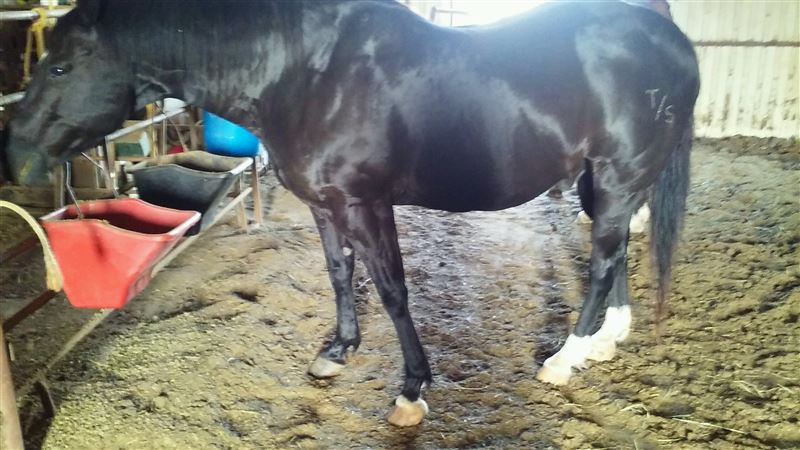 |
|
| |
|
Elite Veteran
Posts: 762

Location: NC | Has the weather been doing funky temperature changes? Not sure where you are but down here in the south it was 70's yesterday and dropped to 50 last night. That can give one a bellyache as well. |
|
| |
|
Elite Veteran
Posts: 612
| We have a gelding that gets gas colic. He used to have epsides of it at least once a month. We feed him Platinum Performance and it solved the problem. This is the only supplement that he gets and we didn't change have to change his diet. |
|
| |
|
 The One
Posts: 7998
Location: South Georgia | Sandok - 2019-05-14 11:13 AM Would like some opinions on gas colic. Has anyone dealt with it? How did you tell it was only gas colic? Is there anything that would prevent this from happening? I went out to the barn this morning to feed my two geldings. About a month ago I lost my 19 year old mare to colic. Not sure what caused it as they have been on this pasture for 10 years but was suggested to me it most likely was because of the grass pasture. So since then as I only have the two I have locked them out of the big pasture. There is enough grass to pick at around the barn. Anyway this morning my black gelding, he is 24 years old, was trotting hot laps around the pasture. Got him caught and he seemed uncomfortable so I went and got the Kolik Ease and gave him a dose of that. Listened for cut sounds and he had gut sounds. So fed my other gelding and walked the Black around for a while. Took him back inside the barn and he had calmed down a lot. So I turned him loose and went to the house to get ready for work. Came back out 30 minutes later and he is just calmly eating his alfalfa cubes. Had good cut sounds so here I am at work and will be running home to check on him. Not sure what caused this as there has been no change in feed, has fresh water, turned out 24/7 on limited pasture, grass not lush, gets a little hay if they want it, not on any processed grain, gets Forco and Probotics. What else can I do to prevent this? I am thinking it is our weather changes. Thanks for any opinions. I have a horse that had recurrent (weekly to bi-weekly) gas colic for a year and we could NOT find any rhyme or reason. At first we thought ulcers. Then hoof pain. Paid $2600 in diagnostics, and nothing was wrong anywhere. About 2 months ago, he had 3 colics in a week, so I rushed him to hospital on a Sunday. Everything was fine by the time we got there. Vet took a stab at diagnosis given long story and symptoms--right dorsal colitis resulting from an abscess one year ago where he was given bute. He has been off of hay for 2 months now and he has had ZERO colic episodes since then. The hay was scratching the ulcered colon and he could never heal. I had no clue. So, my response would be, it depends on what the cause was.
Edited by horsegirl 2019-05-14 12:07 PM
|
|
| |
|
 Elite Veteran
Posts: 1079
Location: MN | horsegirl - 2019-05-14 11:58 AM
Sandok - 2019-05-14 11:13 AM
Would like some opinions on gas colic. Has anyone dealt with it? How did you tell it was only gas colic? Is there anything that would prevent this from happening?
I went out to the barn this morning to feed my two geldings. About a month ago I lost my 19 year old mare to colic. Not sure what caused it as they have been on this pasture for 10 years but was suggested to me it most likely was because of the grass pasture. So since then as I only have the two I have locked them out of the big pasture. There is enough grass to pick at around the barn. Anyway this morning my black gelding, he is 24 years old, was trotting hot laps around the pasture. Got him caught and he seemed uncomfortable so I went and got the Kolik Ease and gave him a dose of that. Listened for cut sounds and he had gut sounds. So fed my other gelding and walked the Black around for a while. Took him back inside the barn and he had calmed down a lot. So I turned him loose and went to the house to get ready for work. Came back out 30 minutes later and he is just calmly eating his alfalfa cubes. Had good cut sounds so here I am at work and will be running home to check on him. Not sure what caused this as there has been no change in feed, has fresh water, turned out 24/7 on limited pasture, grass not lush, gets a little hay if they want it, not on any processed grain, gets Forco and Probotics. What else can I do to prevent this? I am thinking it is our weather changes. Thanks for any opinions.
I have a horse that had recurrent (weekly to bi-weekly) gas colic for a year and we could NOT find any rhyme or reason. At first we thought ulcers. Then hoof pain. Paid $2600 in diagnostics, and nothing was wrong anywhere. About 2 months ago, he had 3 colics in a week, so I rushed him to hospital on a Sunday. Everything was fine by the time we got there. Vet took a stab at diagnosis given long story and symptoms--right dorsal colitis resulting from an abscess one year ago where he was given bute. He has been off of hay for 2 months now and he has had ZERO colic episodes since then. The hay was scratching the ulcered colon and he could never heal. I had no clue. So, my response would be, it depends on what the cause was.
WOW horsegirl!!! Thats crazy. Glad you finally got that figured out!! I know you did so much for your baby to try to resolve his issues. |
|
| |
|
 Reaching for the stars....
Posts: 12708
| Shortly after Zeon getting home from OK and meeting DFP she had the worst case of gas colic my vet had ever seen. I had a whip and my voice and kept her from rolling over - I made her think I would kill her if she started to roll and must have been convincing. We worked with her for about 4 hours and finally got her to where she was farting every step, and stopped trying to roll over when she laid down. Many shots of bucospan (sp?) and a bit of banamine were all we could give her, she was so wound up we couldn't tube her. My vet said she needed to go to the hospital but her worth at the time was what was in her belly so she couldn't have anesthesia so we stayed up with her for about 20 hours. It was ugly. I've never had to yell, stomp, crack whip and cuss like I did to keep her up at anything in my life. We saved her and Peon tho so all worth it. She's always been sensitive to weather changes until after that incident. She was treated for ulcers for a straight 60 days after and now has not had any issues. And Peon is 8yo now so that's quite a while. I've changed to sugar free alfalfa diet since also which can't hurt. |
|
| |
|
Expert
Posts: 1207
| Yes the weather has been doing funky things. Like dipping down into the 40's at night then during the day into the 80's, rain, rain and then more rain. He has only done this twice before and if I remember the weather was sort of funky then also. I thought Forco was supposed to take care of episodes like this. Not sure what else to try. I went home at noon and both were standing in front of the fan in the barn just chilling. I listened to his gut and he had good gut sounds. I just panic every since my mare had to be put done because of colic and a ruptured stomach. |
|
| |
 Gas Colic