|
|
 Born not Made
Posts: 2937
   
Location: North Dakota | I was watching an Al Dunning reining video I bought. In one section, he is analyzingn a prospect for reining. He said it twice that the horse "looks strong in the stifle" without describing what he means by that.
I have never heard of this phrase. Can someone describe how you can tell just by looking at a horse that they are "strong in the stifle"?
|
|
| |
|
 Veteran
Posts: 135
Location: louisiana | Im curious to |
|
| |
|
| The stifles are actually the horses back leg knee joint... so keep this in mind.
It is held in place by nothing but muscles and the better the condition of the horse and more muscular in this region the stronger the stifle // knee joint position becomes to the frame of the horse.
You want to see a mass of muscles over the stifle joint area and interconnected upwards to the rump muscles along with the buttock muscles flowing down into the gaskin area . ..
Also, look to the front shoulder and there should be a balanced mass of muscle in this area also to support it too since it is totally held in place by muscles. The muscle that moves the shoulder blade is a flat muscle located in front of the shoulder blade and extends upward into the neck line. .. You see race horses nodding their heads coming across the finish line ... this action is working the shoulder blade to move the front leg forward to start and complete the horses stride. .. This is where a tight tie down is a handicap to your horse.
Another feature you do not want on a barrel horse, reiner or cutter is a wide space between the front legs and V muscles in this gap. It hinders a horses agility by making it difficult to impossible for a horse to cross his front legs to do a side pass. ... This conformation flaw is coming from the crossover of draft horses many years ago to make a stronger horse to buck the snow in the northern cattle states and it is used for pulling in draft breeds ... not agility. .. you will see this is halter horses too.
Doc Bar changed the style of cutting and improved the old bulldog qh conformation to get down in the dirt and look at a cow conformation by giving them a longer neck for balance and a narrow front end to operate and move side to side like a tricycle .... the reiner's 360 allowed it to sidepass during the maneuver instead of hopping around and around ...
Take your horses out of the arena and do a lot of trail//pasture riding (hours) to keep them in shape and your stifle and front end problems will not be due to horses being out of condition. .. and for gosh sakes do not fall for that backing up hills and doing rollbacks and all the other super stressful exercises that people suggest while trying to kill their horses ... lol ..
Movement of the these joints due to muscle strain is the leading cause of stifle or front end problems and sore backs. Movement changes the angle of the joint movement and everything else above and below ...
GOOD LUCK ...
Edited by BARRELHORSE USA 2014-06-04 10:51 AM
|
|
| |
|
Veteran
Posts: 269
| I found this article helpful:
http://www.sportsmassageinc.com/Articles/AHSSE_merged.pdf
|
|
| |
|
 Extreme Veteran
Posts: 440
Location: The Frozen North | A lot of times this is by looking at them from the rear, you want them nice and wide "strong" through the stifle region. The majority of the muscling you're seeing is the quadriceps. |
|
| |
|
Born not Made
Posts: 2937
Location: North Dakota | Very interesting!
So then, I know these pictures aren't the greatest (I can take new ones) as they are just what I have at the moment on my phone. This one is from a couple months ago:
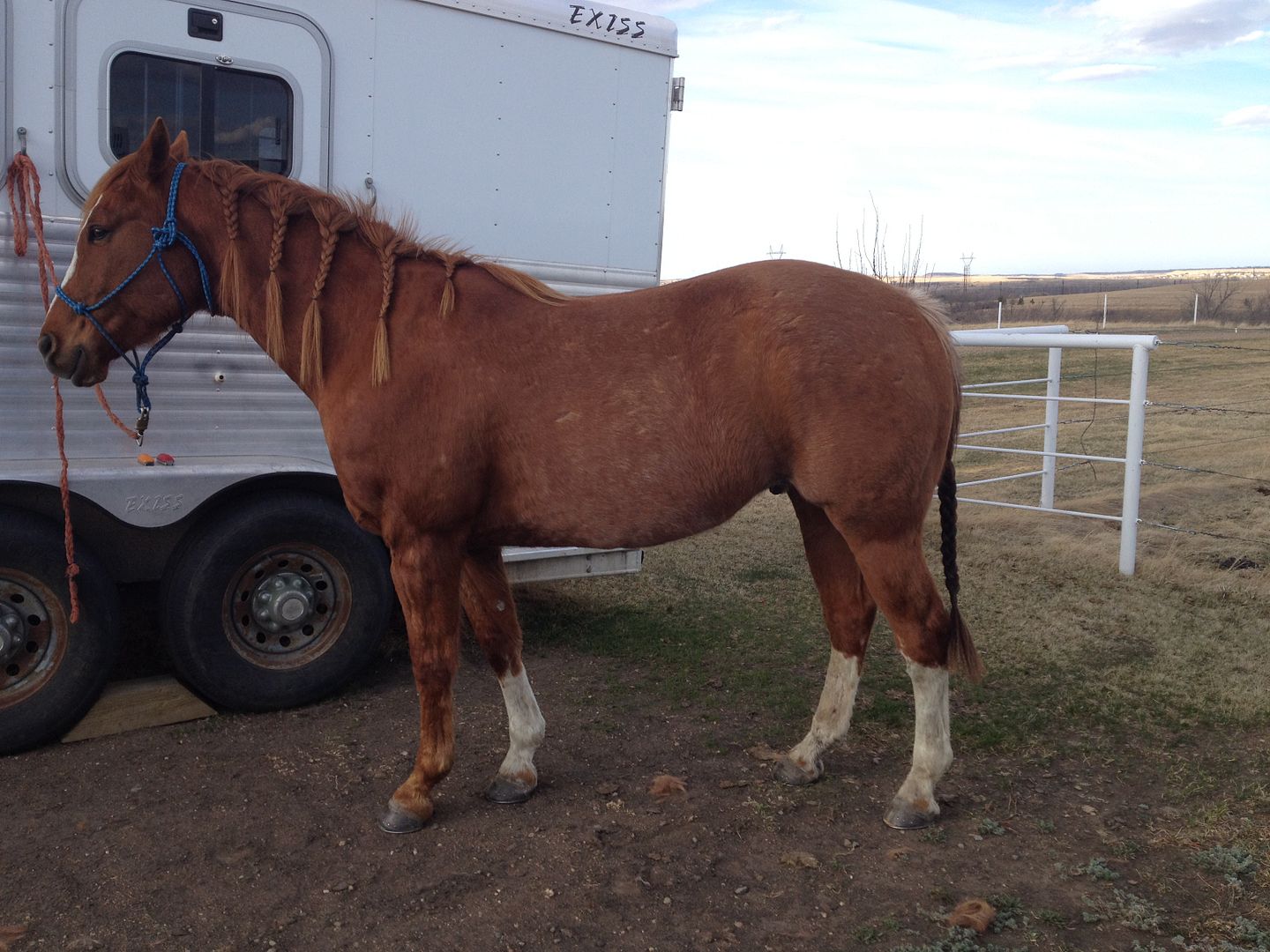
And this one is from a few weeks ago.

My horse DOES have a catching stifle problem in his right hind. Would you say his stifles look "weak"? (although I may need to provide better pictures before that can be answered)
Since BarrelHorseUSA mentioned ride LOTS on the trails : Since the end of February, I have been riding him almost every day. (Did the same last year and the year before.) Usually out on the trails. Usually around 4 miles or more. Once or twice a week (usually once) we will do arena work. Now that the summer is picking up, we are usually hauling somewhere on the weekends.
Edited by r_beau 2014-06-04 2:14 PM
|
|
| |
|
Hungarian Midget Woman

Location: Midwest |  |
|
| |
|
 Accident Prone
Posts: 22277
Location: 100 miles from Nowhere, AR | barrelracr131 - 2014-06-04 2:35 PM
That one looks a little heavy in the forehand, actually. |
|
| |
|
Hungarian Midget Woman
Location: Midwest | Three 4 Luck - 2014-06-04 2:44 PM barrelracr131 - 2014-06-04 2:35 PM
It's creepy
with the hands and all
|
|
| |
|
Born not Made
Posts: 2937
Location: North Dakota | Okay, better pictures!! Tell me if I"m wrong, but I feel like his stifle looks great from the outside. But clearly he has problems with it internally.  ..... Which defeats the purpose of a horse "looking strong" in the stifles?? ..... Which defeats the purpose of a horse "looking strong" in the stifles??


|
|
| |
|
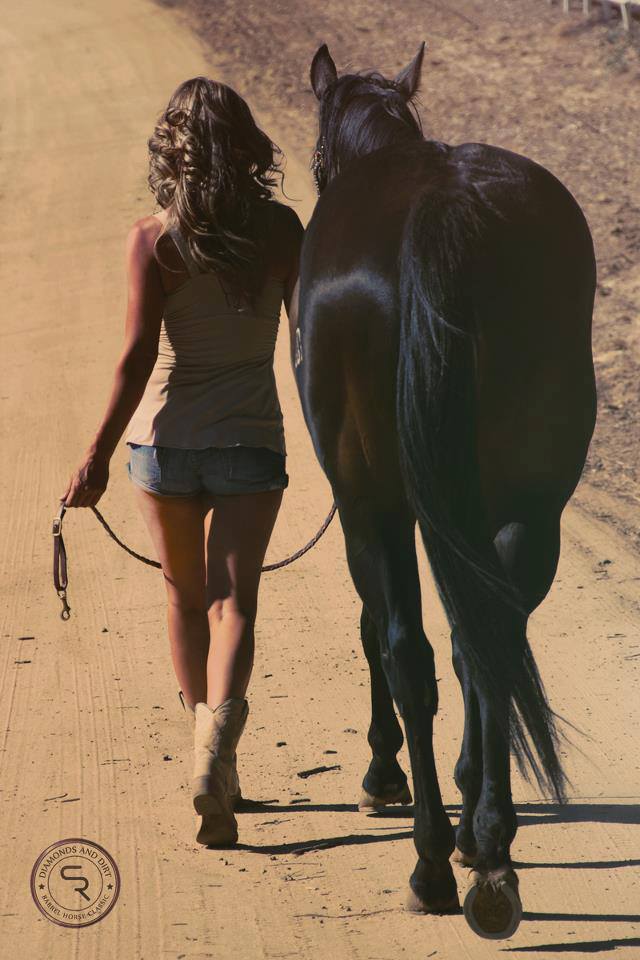
| This is a perfect picture of what I call an hour glass figure when looking directly at the rear end ....
You can see the muscle build up across the width of the rump and then below positioned at the stifles ... very easy to see on the right side ...
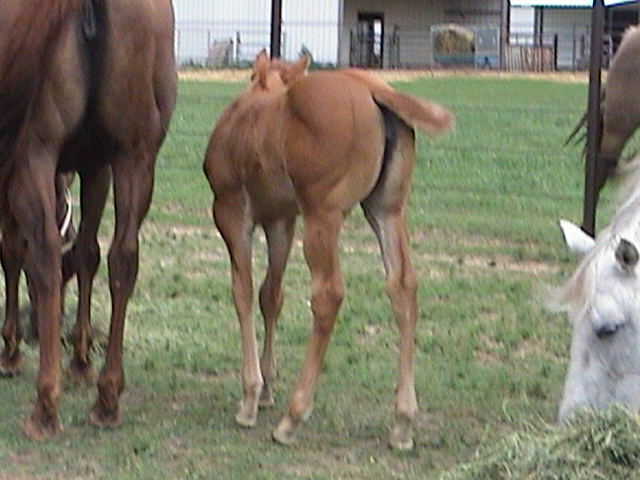
You can see this aspect of conformation in young foals as they build muscle mass and on into adult horses. This hour glass configuration has to be bred into a horse and cannot be redefined by exercise if horse is smooth muscled from hip to stifle area.
As you can easily see in this butt shot of mother and daughter ... the hour glass configuration is very apparent along with the buttock muscles extending very smoothly into the gaskins ....
 (CONFORMATION PERFECT.jpg) (CONFORMATION PERFECT.jpg)
 (SHAMELESS 3 (3).JPG) (SHAMELESS 3 (3).JPG)
Attachments
----------------
 CONFORMATION PERFECT.jpg (72KB - 246 downloads) CONFORMATION PERFECT.jpg (72KB - 246 downloads)
SHAMELESS 3 (3).JPG (62KB - 247 downloads)
|
|
| |
|
 Husband Spoiler
Posts: 4151
Location: North Dakota | I have a mare with a nice hour glass figure but she still has stifle issues. She doesn't lock up but she is weak and it does sometime catch. I just had it blistered on Monday so hopefully that makes a difference.
 (IMG_1979.jpg) (IMG_1979.jpg)
Attachments
----------------
IMG_1979.jpg (97KB - 246 downloads)
|
|
| |
|
Accident Prone
Posts: 22277
Location: 100 miles from Nowhere, AR | Just Bring It - 2014-06-05 12:51 PM I have a mare with a nice hour glass figure but she still has stifle issues. She doesn't lock up but she is weak and it does sometime catch. I just had it blistered on Monday so hopefully that makes a difference.
Even with good conformation and muscle support, they can still have issues. They're not as likely, but it still happens. |
|
| |
|
  Queen Boobie 2
Posts: 7521
| Three 4 Luck - 2014-06-05 12:54 PM Just Bring It - 2014-06-05 12:51 PM I have a mare with a nice hour glass figure but she still has stifle issues. She doesn't lock up but she is weak and it does sometime catch. I just had it blistered on Monday so hopefully that makes a difference. Even with good conformation and muscle support, they can still have issues. They're not as likely, but it still happens.
Amen. Have a calf horse, who is very strong in his stifle area, that developed stifle problems later in his career.
The stifle joint is comparable to the human knee. All sorts of athletes get knee problems, and some of us less athletic types just get achy knees from getting old (LOL).
I believe you should condition with stifles in mind, but a certain amount of stifle problems come with the athletic endeavors we do with our horses. |
|
| |
|
Born not Made
Posts: 2937
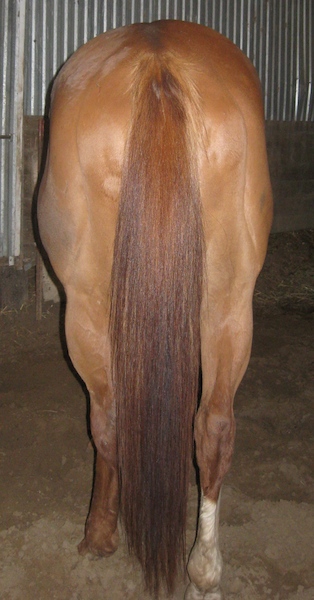
Location: North Dakota | Ah, I see. My horse doesn't have much of an hourglass shape. This picture was a good month ago or more, but it looks much different that the horse pictured above.

Edited by r_beau 2014-06-05 1:47 PM
|
|
| |


 Folks on-line