|
|
 Buttered Noodles Snacker
Posts: 4377
  
Location: NC | The post with the super cute bay roan got me wondering...
I thought white hairs on the face was an indication they would gray out and white in the body with a darker face was an indication of roaning??? I ask because I have a friend with a baby born out of a roan mare and a gray stud and we are trying to figure out if the baby is a roan or a gray.... Thanks
|
|
| |
|
 You get what you give
Posts: 13030
 
Location: Texas | Well if one parent is roan and the other is gray, your best bet would be to just pull tail hairs and test the baby for both, because they CAN have both the roan and the gray gene. IF they have both, the gray gene will eventually over ride the roan and they will gray out. If he's just a roan, his face will be dark and there won't be that ring around his eye. If he's going to gray out, they'll usually have that ring around the eye.
I had a gelding who was out of a blue roan mare by a roan turned gray stud. He was born bay roan- solid bay head, roan body, dark legs. But the older her got his face started turning and by the time he was 5 he looked like a regular gray horse. |
|
| |
|
  Sock eating dog owner
Posts: 4557

Location: Where the pavement ends and the West begins Utah | Grey will have black skin pigment any other color will have pink skin pigment. |
|
| |
|
Regular
Posts: 55
| casualdust07 - 2015-04-17 7:03 AM
Well if one parent is roan and the other is gray, your best bet would be to just pull tail hairs and test the baby for both, because they CAN have both the roan and the gray gene. IF they have both, the gray gene will eventually over ride the roan and they will gray out. If he's just a roan, his face will be dark and there won't be that ring around his eye. If he's going to gray out, they'll usually have that ring around the eye.
I had a gelding who was out of a blue roan mare by a roan turned gray stud. He was born bay roan- solid bay head, roan body, dark legs. But the older her got his face started turning and by the time he was 5 he looked like a regular gray horse.
The ring on the eyes is where I look first. Had a roan that was a blue roan and he always had gray around his muzzle and low and be hold around 10 "Blue" turned grey. But still had black main and tail until we sold him at 12.
There was always the grey rind around his eyes from 2-10. |
|
| |
|
 Extreme Veteran
Posts: 425
Location: California | My mare was a "Blue Roan". I bought her (grade) a month before she turned 3. Every trainer I worked with thought she was a true blue for years. Actually one trainer who I didn't see for about 5 years thought I had just bought a new horse. It was a very slow transition, but her face turned white. She is now 15. I will try to post before & after photos.
I think your best bet would be to do a DNA color test
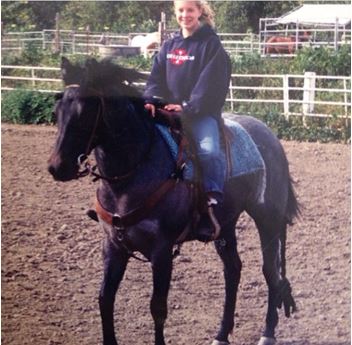 (BlueMoon1.JPG) (BlueMoon1.JPG)
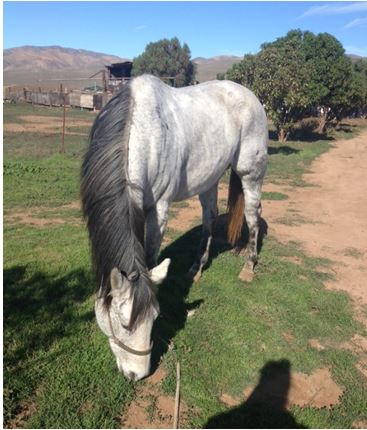 (BlueMoon.JPG) (BlueMoon.JPG)
Attachments
----------------
 BlueMoon1.JPG (38KB - 165 downloads) BlueMoon1.JPG (38KB - 165 downloads)
BlueMoon.JPG (43KB - 191 downloads)
|
|
| |
|
 The Color Specialist
Posts: 7530
Location: Washington. (The DRY side.) | cow pie - 2015-04-17 6:25 AM Grey will have black skin pigment any other color will have pink skin pigment.
That is only true if the foal is a red based color at birth like sorrel or palomino. Babys that are black, bay etc... have dark skin at birth no matter if they are going to "go gray" or not. |
|
| |
|
The Color Specialist
Posts: 7530
Location: Washington. (The DRY side.) | To the OP, can you post pictures of the baby? Typically a baby that is gray is a darker color with darker legs than a foal that is the same base color but not gray. Meaning say if the foal is born bay, But it is NOT gray, it's legs tend to be a light tannish or grayish color. But if a foal is born bay and will gray, it's legs are more black at birth. (They look to be colored like an adult horse rather than the "muted" color of a typical foal.) "Red" babies tend to have darker almost grayish legs at birth if they are gray, rather than legs that are more "blond" or lighter than the rest of their body. |
|
| |
|
The Color Specialist
Posts: 7530
Location: Washington. (The DRY side.) | With foals that are roan, but nOT gray, sometimes you can SEE the "roan" on them at birth, sometimes you can run your hand against the lay of the coat (epsecially on their butt) and see "roany" hair underneeth. And with others, you just have to wait until they shed their foal coat and see what color they are. |
|
| |
|
 Champ
Posts: 19623
Location: Peg-Leg Julia Grimm | If I really couldn't tell, I'd pull hair and send it in for testing. That way you know and you can register the foal correctly. |
|
| |
|
Buttered Noodles Snacker
Posts: 4377
Location: NC | The colt I was asking about is a friends colt, I will have to take pictures next time I visit. Thanks everyone. |
|
| |
|
 Roan Wonder
Location: SW MO | On a roan foal there is really no way of knowing without testing it. 95% of the time if you breed a gray to roan you will get a gray. Some of them have white hairs around their eyes some don't. Some of them are easy to tell & others are almost impossible to tell. I always tell people count on it turning gray & maybe you will get a roan. Some gray horses also carry a gray gene. So they will look roan until they are 4 or 5 years old. |
|
| |
|
Veteran
Posts: 116
| If one parent is gray heterozygous then the foal will have. 50% chance of being gray. If the gray parent is homozygous the the foal will be gray 100%
This is true of any dominant color or pattern.
95% percent is a falicy, just like flipping a coin and getting heads 95 times out of a 100. Keep flipping and the odds will eventually even out. |
|
| |


 Folks on-line