|
|
 Extreme Veteran
Posts: 385
 
Location: Texas Big Country | I have not heard this one asked before so sorry if it is a repeat.
I have a mare that bled for the first time last summer 2015. It was a killer hot dirty day. We scoped her (lungs were clean) and laid off, then came back and ran with Lasix. She bled again. We scoped again, clean again. So we gave Lasix and KY red to keep her from bleeding, after which she ran fine. But then late last fall (2015) she strained DDFT. I knew she was out for a year, so being a nice little 1D/2D runner (by AR Star) I bred her to Royal and Famous for 2017 foal. She is sound now and running around the pasture like a crazy girl.
After the foal I will leg her up and run her again. So she will be almost two years out from running. Has anyone else ever laid off a bleeder for two years and brought them back? I wonder if I could control it with excercise, breezes, natural stuff, nose strips, Cur-ost, ventipulmin, etc? anybody been there done that? I would love to hear your experiences. |
|
| |
|
  Neat Freak
Posts: 11216
 
Location: Wonderful Wyoming | I guess I always thought once a bleeder always a bleeder. The damage has been done, but the trick is to keep it from happening more to become a progressive issue. There is obviously meds & supplements to help, but I don't think I have ever heard of one not being considered a bleeder forever. Good luck with her though |
|
| |
|
 Saint Stacey

| When a gelding I purchased started bleeding, we did put him on Lasix. But I talked with a very well know OK vet and with a great race track vet. Both of them said the same thing. They didn't feel like my gelding was a true bleeder. But they didn't want him turning into one which is why we put him on Lasix. I do need to touch base with them again to see how long I should keep him on the Lasix. |
|
| |
|
Elite Veteran
Posts: 699
| Maintaining the airways of the horse is the first step. We have one that we use flovent and albuterol inhalers on. The flovent is a daily to prevent allergies and inflamed airways and the albuterol is to use prior to running. We also use 2 puffs of albuterol 20 minutes prior to dosing the 10 puffs of flovent daily. The albuterol helps the flovent to get deep in the lungs. Ask your Veterinarian about this protocol. Our mare has bled through lasix twice both times super humid weather. I find if we maintain her airways she runs great. We also use breath strips and lasix on this mare. We also always give her electrolyte paste after running to replace lost electrolytes and potassium from the lasix. |
|
| |
|
Expert
Posts: 1611
| It's not a chance I would take after having a bleeder get pneumonia and almost die. A shot of lasix is a hell of alot cheaper than all the vet bills I paid. |
|
| |
|
Extreme Veteran
Posts: 385
Location: Texas Big Country | Thanks for replys. I just have not heard of one being laid off for a few years and how they came back. I appreciate the input and would like to keep this out there for anyone who has actually done this. I was just thinking how people that smoke can have significant healing in their lungs if they quit. I wondered if bleeding in a horses lungs is something that can heal, or if it is a permanant damage. Especially since she scoped clean lungs, with no damage after each episode. She bled 2 times in extremely hot dusty conditions. I understand about the simplicity and efficacy of using Lasix as I have friends that race. I also put out there that they race in Canada and Europe without Lasix, so I would like to educate myself as much as I can on every alternative before I bring her back. I appreciate all opinions. |
|
| |
|
 Elite Veteran
Posts: 999
Location: Sunny So Cal | I haven't heard of one changing from a bleeder to a non bleeder just because of time off. In my understanding they would be considered mild bleeder. Which means you could probably get away with using an alternative to lasix to help your horse. My personal preference is THE Pulmon-EZ and have personally seen it work wonders. But you just have to see what works best for your horse. :) |
|
| |
|
 Member
Posts: 23
| Omg super awesome cross with royal and famous. I would still give lasix. |
|
| |
|
Elite Veteran
Posts: 612
| My horse bleeds sometimes, depending on the weather. I run him on Lasix and use the supplement DMG from Formula 707. He sustained an injury and was off for a year. When I started legging him up, I put him on DMG and back on the same dose of Lasix when I started running him again. I didn't want to take any chances. |
|
| |
|
 Did I miss the party?
Posts: 3864

| triselaine - 2016-09-13 2:45 PM Omg super awesome cross with royal and famous. I would still give lasix.
That's exactly what I was thinking! On both accounts....  |
|
| |
|
Location: WI | I have a mare that is a bleeder that I ended up breeding at age 14 and brought back after the baby was weaned. She was a bad bleeder to begin with, I too thought maybe a couple years off she would get better with time for her lungs to heal. When I brought her back I still continued Lasix but dropped the dosage after a few times to see. Needless to say, it did not help and she is the same as she was prior to the 2 year break. Like someone else stated, Lasix is a relatively cheap alternative to keep your horse healthy and running well compared to possible lung infections from bleeding. |
|
| |
|
The Advice Guru
Posts: 6419
| crossarrowk - 2016-09-13 9:39 AM
Thanks for replys. I just have not heard of one being laid off for a few years and how they came back. I appreciate the input and would like to keep this out there for anyone who has actually done this. I was just thinking how people that smoke can have significant healing in their lungs if they quit. I wondered if bleeding in a horses lungs is something that can heal, or if it is a permanant damage. Especially since she scoped clean lungs, with no damage after each episode. She bled 2 times in extremely hot dusty conditions. I understand about the simplicity and efficacy of using Lasix as I have friends that race. I also put out there that they race in Canada and Europe without Lasix, so I would like to educate myself as much as I can on every alternative before I bring her back. I appreciate all opinions.
Are you sure your vet is going right into the lungs?
As I have learned through the years, not all vets have the equipment to go into the lungs, they can only scope to the tip of the lung. They call it the same thing, and charge you the same price, but it isn't the same. |
|
| |
|
Gettin Jiggy Wit It
Posts: 2734
| I believe once a bleeder always a bleeder. Time off doesnt change things if its 3 months or a year. The most important thing in helping a bleeder is conditioning... and of course the use of lasix. |
|
| |
|
Extreme Veteran
Posts: 385
Location: Texas Big Country | barrelracinbroke - 2016-09-13 8:13 PM triselaine - 2016-09-13 2:45 PM Omg super awesome cross with royal and famous. I would still give lasix. That's exactly what I was thinking! On both accounts....
Edited by crossarrowk 2016-09-14 11:55 AM
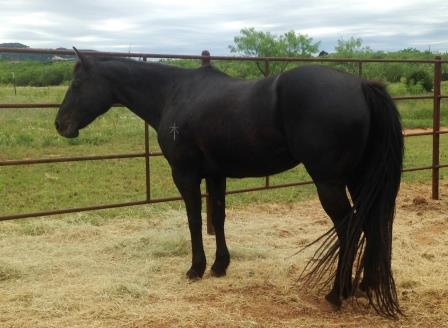 (expresso may 2016 reduced.JPG) (expresso may 2016 reduced.JPG)
Attachments
----------------
 expresso may 2016 reduced.JPG (32KB - 183 downloads) expresso may 2016 reduced.JPG (32KB - 183 downloads)
|
|
| |
|
Extreme Veteran
Posts: 385
Location: Texas Big Country | cheryl makofka - 2016-09-14 10:23 AM crossarrowk - 2016-09-13 9:39 AM Thanks for replys. I just have not heard of one being laid off for a few years and how they came back. I appreciate the input and would like to keep this out there for anyone who has actually done this. I was just thinking how people that smoke can have significant healing in their lungs if they quit. I wondered if bleeding in a horses lungs is something that can heal, or if it is a permanant damage. Especially since she scoped clean lungs, with no damage after each episode. She bled 2 times in extremely hot dusty conditions. I understand about the simplicity and efficacy of using Lasix as I have friends that race. I also put out there that they race in Canada and Europe without Lasix, so I would like to educate myself as much as I can on every alternative before I bring her back. I appreciate all opinions. Are you sure your vet is going right into the lungs? As I have learned through the years, not all vets have the equipment to go into the lungs, they can only scope to the tip of the lung. They call it the same thing, and charge you the same price, but it isn't the same.
That is very interesting. I will check back on that one. Thank you.
|
|
| |
|
Extreme Veteran
Posts: 385
Location: Texas Big Country | hmm89 - 2016-09-14 8:29 AM I have a mare that is a bleeder that I ended up breeding at age 14 and brought back after the baby was weaned. She was a bad bleeder to begin with, I too thought maybe a couple years off she would get better with time for her lungs to heal. When I brought her back I still continued Lasix but dropped the dosage after a few times to see. Needless to say, it did not help and she is the same as she was prior to the 2 year break. Like someone else stated, Lasix is a relatively cheap alternative to keep your horse healthy and running well compared to possible lung infections from bleeding.
Thank you very much, that is exactly what I was hoping to learn from someone who had done this. I appreciate your post. |
|
| |
|
 Expert
Posts: 1612
Location: Cocoa, Florida | This is where I disagree with time off, I think and I've read and researched that time off is the best thing for a bleeder, time off heals the lungs. Yes, I know after a bleed they need a minimum of 30-60 days (recommended) but anything longer is always a bonus. I think it's great that you have a fresh start but I wouldn't even put a horse on the pattern until you have a good few months of legging that horse up and getting them in tip top shape. I think that's a lot of the problem with horses (at least in my area) who bleed, people don't take it serious enough to get their horse in shape. You have to ask yourself, can you honestly say you can walk out of your house right now and run a 5-6 minute mile? Or do you need to condition yourself for it. We ask our horses for a LOT, so we should prepare them for it accordingly. You'd be amazed at the results.
Now if you're a weekend warrior who doesn't have time for all that malarkey, give your horse some lasix and run i guess. I'm not against using drugs that work but if I can prevent it, I will do whatever is possible! |
|
| |
|
 Damn Yankee
Posts: 12390
Location: Somewhere between raising hell and Amazing Grace | In a way, I suppose you could say my horse went from a bleeder to a "non" bleeder.
He has not run on lasix since 2013. I do a million other things for him though. He has not bled in the last three years and gets scoped on a regular basis.
That being said, he could go the rest of his career and never bleed, and yet I will always consider him a bleeder and will always treat him like one.
If I ever have a horse bleed one time, I will always always treat them like a bleeder no matter how much time they have off. |
|
| |
|
Miss Southern Sunshine
Posts: 7427
Location: South Central Florida | yes, you can bring a bleeder back. Not a problem at all, just get her fit before you start running hard. But I'm a little confussed, I thought it said you scoped her and her lungs were clear? If the lungs are clear, why the Lasix? We have a bleeder we run on Lasix and in summer Ventipulman. But we also do other things that are more homeopathic. |
|
| |
|
 You get what you give
Posts: 13030
Location: Texas | crossarrowk - 2016-09-13 9:39 AM
Thanks for replys. I just have not heard of one being laid off for a few years and how they came back. I appreciate the input and would like to keep this out there for anyone who has actually done this. I was just thinking how people that smoke can have significant healing in their lungs if they quit. I wondered if bleeding in a horses lungs is something that can heal, or if it is a permanant damage. Especially since she scoped clean lungs, with no damage after each episode. She bled 2 times in extremely hot dusty conditions. I understand about the simplicity and efficacy of using Lasix as I have friends that race. I also put out there that they race in Canada and Europe without Lasix, so I would like to educate myself as much as I can on every alternative before I bring her back. I appreciate all opinions.
I noticed you are in Texas, so I wouldn't compare what Canada and Europe do when our climate is very different. And their laws may be different... but I'm not educated on that too much.
Secondly, when horses bleed, the blood is usually seen in the trachea on the scope, not necessarily in the lungs. What happens when a horse is bleeding is tiny microscopic capillary bleeds, and when you scope you are getting into macroscopic bronchioles, so it's not black and white if it looks good on a scope that there's not pulmonary fibrosis or damage. Thoracic ultrasound may give you an idea of what the lung surface looks like, because healthy air filled lungs you just see a nice "lung air interface," and unhealthy lungs you see areas of consolidation and other things.
Also, a horse who is a true bleeder will most likely be a bleeder even after rest, because what makes a horse bleed is tied to the physiology of what happens to the pressures in the capillaries versus the pressure in the alveoli at the time of strenuous exercise. Whether or not there is permanent damage, when you put that horse in the same environment that triggered bleeding before, I will expect them to bleed again when not given the medications that they usually get.
If you know from experience she only bleeds in certain conditions, you could possibly run her on lasix and Ky red only when those conditions are present. But, you are potentially running a risk of her bleeding every time you don't run on the meds. Also, a lot of times EIPH bleeding doesn't make it to the nostril, so I would also look for signs of coughing after a run. |
|
| |


 Folks on-line