|
|
 Jr. Detective
    
Location: Beggs, OK | Tdove - 2015-07-14 10:19 AM A lot of feeds do use molasses, but sweet feeds use quite a bit more. The less molasses the better, for my taste. Electrolytes are salt, calcium, magnesium, potassium, and zinc, not sugar. A horse only needs starch to replenish glycogen stores and for fast twitch muscle response. Also, too much fat in today's diets. I am not aware of any alfalfa cubes that use molasses as a binder. While both of your points on ionophore free are very valid, our cubes are ionophore free because we don't use molasses or added minerals, or any products that come from places that process feeds with ionophore present.
Omnis Complete Performance Cubes are the only thing that I feel truly safe feeding anymore. We are still feeding a small amount of Bluebonnet Omega Force to our horses, but I'm not convinced that it's necessary. Slowly but surely I want them off all commercial feeds if possible.
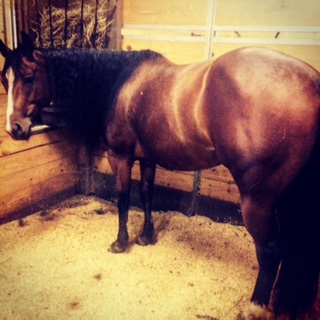
I've read about the benefits of flax for years, but never had tried it until now....Wow, what a difference! I have a mare that has always had a long pretty mane, but it's grown a few inches since she has been on the cubes.
 (G7Baywood.JPG) (G7Baywood.JPG)
Attachments
----------------
 G7Baywood.JPG (48KB - 174 downloads) G7Baywood.JPG (48KB - 174 downloads)
| |
| | |
 Pork Fat is my Favorite
Posts: 3791

Location: The Oklahoma plains. | I guess I am lost on what you are calling sweet feed then? I thought people were saying any feed with molasses is sweet? Molasses itself isnt bad in moderation, IMO but I just dont know of a safe source? Just for comparison, recent laboratory assays of a range of good grass and alfalfa hays showed that they contained from 5.8% to 12.1% sugar, respectively. Fresh pasture is even higher in sugar content. Therefore, the amount of sugar provided from molasses in a pound normal sweet feed is lower than the amount of sugar consumed in a pound of good hay and/or pasture. | |
| | |
 Elite Veteran
Posts: 825
| I'm a bad horse owner lol I'm not as educated on feed as y'all are. I feed mine a mixture of a sweet and pelleted feed that is milled a few hours from here. Mine look great, feel great, and run good with no performance issues. | |
| | |
 You get what you give
Posts: 13030
Location: Texas | We have an outside horse here and they feed him a 14% sweet feed and alfalfa pellets. He looks and rides just like my horses. Can't tell a difference. | |
| | |
Red Bull Agressive
Posts: 5981
Location: North Dakota | rachellyn80 - 2015-07-14 10:35 AM Tdove - 2015-07-14 10:19 AM A lot of feeds do use molasses, but sweet feeds use quite a bit more. The less molasses the better, for my taste. Electrolytes are salt, calcium, magnesium, potassium, and zinc, not sugar. A horse only needs starch to replenish glycogen stores and for fast twitch muscle response. Also, too much fat in today's diets. I am not aware of any alfalfa cubes that use molasses as a binder. While both of your points on ionophore free are very valid, our cubes are ionophore free because we don't use molasses or added minerals, or any products that come from places that process feeds with ionophore present. Omnis Complete Performance Cubes are the only thing that I feel truly safe feeding anymore. We are still feeding a small amount of Bluebonnet Omega Force to our horses, but I'm not convinced that it's necessary. Slowly but surely I want them off all commercial feeds if possible.
I've read about the benefits of flax for years, but never had tried it until now....Wow, what a difference! I have a mare that has always had a long pretty mane, but it's grown a few inches since she has been on the cubes.
Holy sheetcake that is a long mane! I wish so badly that someone would start carrying those here!
Edited by cavyrunsbarrels 2015-07-14 1:35 PM
| |
| | |
  A Lady with Fight
Posts: 2701
Location: NC | Tdove - 2015-07-14 9:50 AM
I didn't say molasses is the main contributor to NSC content. I stated reasons why I don't like sweet feed over straight cereal grains, molasses being one of the major reasons. The other being the cereal grains in sweet feeds are lesser quality.
Also, it isn't NSC content of your grain that matters, its NSC content of the total ration. You could feed 3 bs of 50% NSC with 17lbs of alfalfa or you could feed 10 lbs of 20% NSC with 10 lbs of grass hay. Both total rations would yield approximately 3.2 lbs of sugar or have a total NSC of 16% in your total ration. I would highly argue that the former ration is the better one. Low starch is the in thing right now, but many barrel racers would see better performance if they added a little whole starch to their horse's diet.
Hence why I said corn is what pushes the entire feed to have a combined nsc content over 30-40%
A little starch isn't a bad thing, no. Keeping it around 20% is safe for most horses I would think. You have to be mindful of the ones who are sensitive to starch with ulcers, PSSM and other issues. But mine have done fine around that range for the most part. They're also turned out 24/7. I don't think feeding a good bit of starch and stalling would turn out well. It would kill a horses digestive tract.
But when you get into these cheap sweet feeds that have 25+% with some having more than 30 even 40% overall nsc content, THAT is excessive and ridiculous. That's feeding straight candy and empty calories. Especially when it's usually a low fat low fiber. Empty junk calories. | |
| | |
Pork Fat is my Favorite
Posts: 3791
Location: The Oklahoma plains. | hlynn - 2015-07-14 1:21 PM Tdove - 2015-07-14 9:50 AM I didn't say molasses is the main contributor to NSC content. I stated reasons why I don't like sweet feed over straight cereal grains, molasses being one of the major reasons. The other being the cereal grains in sweet feeds are lesser quality. Also, it isn't NSC content of your grain that matters, its NSC content of the total ration. You could feed 3 bs of 50% NSC with 17lbs of alfalfa or you could feed 10 lbs of 20% NSC with 10 lbs of grass hay. Both total rations would yield approximately 3.2 lbs of sugar or have a total NSC of 16% in your total ration. I would highly argue that the former ration is the better one. Low starch is the in thing right now, but many barrel racers would see better performance if they added a little whole starch to their horse's diet. Hence why I said corn is what pushes the entire feed to have a combined nsc content over 30-40% A little starch isn't a bad thing, no. Keeping it around 20% is safe for most horses I would think. You have to be mindful of the ones who are sensitive to starch with ulcers, PSSM and other issues. But mine have done fine around that range for the most part. They're also turned out 24/7. I don't think feeding a good bit of starch and stalling would turn out well. It would kill a horses digestive tract. But when you get into these cheap sweet feeds that have 25+% with some having more than 30 even 40% overall nsc content, THAT is excessive and ridiculous. That's feeding straight candy and empty calories. Especially when it's usually a low fat low fiber. Empty junk calories.
I could give you a couple of big name owners, breeders and trainers that feed straight oats to stalled horses and they are at the top of our industry leader board. I think even Amy Laymon who is as all natural as one would try to be, feeds a cobb mix to stalled horses. It has been done for years. My guess is those exceed your desired starch number? Like Tdove mentioned, fat was the hot button issue and starch comes and goes these days. I too, think people focus on too much fat in their horses diet. JMO.
We LOVE the OMNI cube btw.
| |
| | |
A Lady with Fight
Posts: 2701
Location: NC | TurnLane - 2015-07-14 4:03 PM
hlynn - 2015-07-14 1:21 PM Tdove - 2015-07-14 9:50 AM I didn't say molasses is the main contributor to NSC content. I stated reasons why I don't like sweet feed over straight cereal grains, molasses being one of the major reasons. The other being the cereal grains in sweet feeds are lesser quality. Also, it isn't NSC content of your grain that matters, its NSC content of the total ration. You could feed 3 bs of 50% NSC with 17lbs of alfalfa or you could feed 10 lbs of 20% NSC with 10 lbs of grass hay. Both total rations would yield approximately 3.2 lbs of sugar or have a total NSC of 16% in your total ration. I would highly argue that the former ration is the better one. Low starch is the in thing right now, but many barrel racers would see better performance if they added a little whole starch to their horse's diet. Hence why I said corn is what pushes the entire feed to have a combined nsc content over 30-40% A little starch isn't a bad thing, no. Keeping it around 20% is safe for most horses I would think. You have to be mindful of the ones who are sensitive to starch with ulcers, PSSM and other issues. But mine have done fine around that range for the most part. They're also turned out 24/7. I don't think feeding a good bit of starch and stalling would turn out well. It would kill a horses digestive tract. But when you get into these cheap sweet feeds that have 25+% with some having more than 30 even 40% overall nsc content, THAT is excessive and ridiculous. That's feeding straight candy and empty calories. Especially when it's usually a low fat low fiber. Empty junk calories.
We LOVE the OMNI cube btw.
That's great. Snaps for them. I'm not spending $15,000 on a single prospect every spring or $50,000 on a finished horse to haul up and down the road. I'm a weekend warrior with average horses and mine are outside 24/7. They stay fat healthy and happy on 6lbs a day of what I choose to feed them. And as much hay as they will eat.
Fat is extremely important in a performance horses diet. That's where the horse gets most of it's daily fuel from. How do we leg a horse up? A lot of long trotting and loping. FAT is the fuel for all of that work. Carbs only come into play for anaerobic excercise and that's only happening once a week. That's it. 99% of what a horse does is powered by fat, not carbs. So no, a normal performance horse doesn't need an excessive amount of carbs. All those carbs do is get turned into sugar and can cause trouble in the horses gut. Horses were designed to be grazers. They utilize fiber best. Not starch. Cereal grains may be 'all natural' but that doesn't mean they were solely meant to be fed to horses. You have to have a balance.
It's basic biology. | |
| | |
Pork Fat is my Favorite
Posts: 3791
Location: The Oklahoma plains. | hlynn - 2015-07-14 3:24 PM TurnLane - 2015-07-14 4:03 PM hlynn - 2015-07-14 1:21 PM Tdove - 2015-07-14 9:50 AM I didn't say molasses is the main contributor to NSC content. I stated reasons why I don't like sweet feed over straight cereal grains, molasses being one of the major reasons. The other being the cereal grains in sweet feeds are lesser quality. Also, it isn't NSC content of your grain that matters, its NSC content of the total ration. You could feed 3 bs of 50% NSC with 17lbs of alfalfa or you could feed 10 lbs of 20% NSC with 10 lbs of grass hay. Both total rations would yield approximately 3.2 lbs of sugar or have a total NSC of 16% in your total ration. I would highly argue that the former ration is the better one. Low starch is the in thing right now, but many barrel racers would see better performance if they added a little whole starch to their horse's diet. Hence why I said corn is what pushes the entire feed to have a combined nsc content over 30-40% A little starch isn't a bad thing, no. Keeping it around 20% is safe for most horses I would think. You have to be mindful of the ones who are sensitive to starch with ulcers, PSSM and other issues. But mine have done fine around that range for the most part. They're also turned out 24/7. I don't think feeding a good bit of starch and stalling would turn out well. It would kill a horses digestive tract. But when you get into these cheap sweet feeds that have 25+% with some having more than 30 even 40% overall nsc content, THAT is excessive and ridiculous. That's feeding straight candy and empty calories. Especially when it's usually a low fat low fiber. Empty junk calories.
We LOVE the OMNI cube btw.
That's great. Snaps for them. I'm not spending $15,000 on a single prospect every spring or $50,000 on a finished horse to haul up and down the road. I'm a weekend warrior with average horses and mine are outside 24/7. They stay fat healthy and happy on 6lbs a day of what I choose to feed them. And as much hay as they will eat. Fat is extremely important in a performance horses diet. That's where the horse gets most of it's daily fuel from. How do we leg a horse up? A lot of long trotting and loping. FAT is the fuel for all of that work. Carbs only come into play for anaerobic excercise and that's only happening once a week. That's it. 99% of what a horse does is powered by fat, not carbs. So no, a normal performance horse doesn't need an excessive amount of carbs. All those carbs do is get turned into sugar and can cause trouble in the horses gut. Horses were designed to be grazers. They utilize fiber best. Not starch. Cereal grains may be 'all natural' but that doesn't mean they were solely meant to be fed to horses. You have to have a balance. It's basic biology.
I am just saying, some of the biggest names in our industry say differntly. All oats and big wins. Thats all :) Not arguing, just stating facts. I know biology says one thing to support your preference but when I see industry leaders doing it, I tend to believe their results.  | |
| | |
Pork Fat is my Favorite
Posts: 3791
Location: The Oklahoma plains. | And btw, I was quoting Tdove who said too much fat and I think she/he seems very educated on the fact. I was just agreeing with them. | |
| | |
You get what you give
Posts: 13030
Location: Texas | hlynn - 2015-07-14 3:24 PM
TurnLane - 2015-07-14 4:03 PM
hlynn - 2015-07-14 1:21 PM Tdove - 2015-07-14 9:50 AM I didn't say molasses is the main contributor to NSC content. I stated reasons why I don't like sweet feed over straight cereal grains, molasses being one of the major reasons. The other being the cereal grains in sweet feeds are lesser quality. Also, it isn't NSC content of your grain that matters, its NSC content of the total ration. You could feed 3 bs of 50% NSC with 17lbs of alfalfa or you could feed 10 lbs of 20% NSC with 10 lbs of grass hay. Both total rations would yield approximately 3.2 lbs of sugar or have a total NSC of 16% in your total ration. I would highly argue that the former ration is the better one. Low starch is the in thing right now, but many barrel racers would see better performance if they added a little whole starch to their horse's diet. Hence why I said corn is what pushes the entire feed to have a combined nsc content over 30-40% A little starch isn't a bad thing, no. Keeping it around 20% is safe for most horses I would think. You have to be mindful of the ones who are sensitive to starch with ulcers, PSSM and other issues. But mine have done fine around that range for the most part. They're also turned out 24/7. I don't think feeding a good bit of starch and stalling would turn out well. It would kill a horses digestive tract. But when you get into these cheap sweet feeds that have 25+% with some having more than 30 even 40% overall nsc content, THAT is excessive and ridiculous. That's feeding straight candy and empty calories. Especially when it's usually a low fat low fiber. Empty junk calories.
We LOVE the OMNI cube btw.
That's great. Snaps for them. I'm not spending $15,000 on a single prospect every spring or $50,000 on a finished horse to haul up and down the road. I'm a weekend warrior with average horses and mine are outside 24/7. They stay fat healthy and happy on 6lbs a day of what I choose to feed them. And as much hay as they will eat.
Fat is extremely important in a performance horses diet. That's where the horse gets most of it's daily fuel from. How do we leg a horse up? A lot of long trotting and loping. FAT is the fuel for all of that work. Carbs only come into play for anaerobic excercise and that's only happening once a week. That's it. 99% of what a horse does is powered by fat, not carbs. So no, a normal performance horse doesn't need an excessive amount of carbs. All those carbs do is get turned into sugar and can cause trouble in the horses gut. Horses were designed to be grazers. They utilize fiber best. Not starch. Cereal grains may be 'all natural' but that doesn't mean they were solely meant to be fed to horses. You have to have a balance.
It's basic biology.
carbohydrates are definitely used for anaerobic lactic acid fermentation through glycolysis that makes pyruvate. But it also definitely is used in cellular respiration. The difference is theres many different steps in cellular respiration which is why other nutrients like fatty acids and amino acids can be funneled into the krebs cycle and then oxidative phosphorylation.
Honestly, you can't ignore any part of a horse's nutrition. Horses need adequate amounts of fat, protein, carbohydrates, and vitamins and minerals. Excess carbohydrates are converted to fat... so it becomes fat either way.
I mostly concern myself with the protein to fat ratio, and then Ca:P. That's the two biggies when I look at the normal, average, perfectly capable of storing complex carbohydrates animal. When I have one that can't metabolize carbohydrates normally, then I start looking at low carb sources of feed. | |
| | |
I just read the headlines
Posts: 4483
| Casualdust, could you explain the protein/fat ratio? I am trying to learn about feeding my guys the best I can afford. This is the first I have heard of such a ratio and I would love it if you have time to educate me on this. | |
| | |
You get what you give
Posts: 13030
Location: Texas | Nutrition wasn't my favorite subject but let me dig up my notes and see what I've got.
For my performance horses I like a 14:6 protein to fat.. also with my broodmares. Some people have found 14:8 in some brands. I'll come back with info | |
| | |
Expert
Posts: 1695
Location: Willows, CA | This is a topic that is kind of like Hillary Clinton. It does not matter what you say on either side of this discussion, those who like sweet feed, and sometimes a lot of sweet feed, are not going to change their mind, no matter what information comes out. Those who hate it and do not care if someone else has fed it and reports no problems, aren't changing their minds either. A few in the middle might be swayed by either side. I have talked at length about limiting starches and sugars in the diet to the amount that will fit the physical form of the digestive system, and, in the case of the grain based sweet feed, be digested in the small intestine. Any sweet feed that travels beyond that is disruptive to hind gut efficiency. There can be other issues when fed at more than several pounds beyond it's effect on properly digesting the roughage portion of the diet. These include attitude issues, and colic risk at higher feed rates. There is also more internal body heat generated by the digestive process of sweet feed. This time of year, that can be a bad thing in many parts of the country. The comment about pour quality ingredients used in sweet feed is basically true. Many companies will buy lower quality grain since it will be covered up with molasses and the damage is not easy to see. These products are made to sell at a low price point, so lower cost ingredients are important to the manufacturer. In general, I feel sweet feed is a poor use of your feed dollar for what you get. Considering the fact that I brought the first higher fat, low starch commercial feed to equine market in the 1980's, (Natural Glo), you should expect this to be the side that I would take in this discussion. But then, I am one of those who will not be voting for Hillary.
Edited by winwillows 2015-07-14 4:06 PM
| |
| | |
Jr. Detective
Location: Beggs, OK | casualdust07 - 2015-07-14 4:03 PM Nutrition wasn't my favorite subject but let me dig up my notes and see what I've got. For my performance horses I like a 14:6 protein to fat.. also with my broodmares. Some people have found 14:8 in some brands. I'll come back with info
Beyond the ratio of the concentrates, what ratio is your feed as a whole when you include forage? That's what you have to consider...and is usually what throws people off when they're feeding concentrates that are meant to be fed as a complete feed, such as Sr formulas. | |
| | |
You get what you give
Posts: 13030
Location: Texas | From my nutrition course as far as growing horses, like yearlings, are concerned my prof suggests feeding a
14% balanced ration at a rate of 1-1.5% body weight. He says to caution adding fat to balanced diets to growing horses because fat can dilute and change the nutrient to calorie ratio and dilute minerals. He is more of a- feed a balanced ration and don't add things to it because then you don't know what you're giving too much of and what you're giving too little of.
alright in talking about performance horses:
he says muscle glycogen stores are a key factor in performance. cool info point- it takes 48 hours to completely replenish spent glycogen stores. by improving diet and exercise you can improve their capacity to store glycogen (in the normal horse without glycogen storage problems).
high starch diets have higher resting glycogen stores than low starch diets (which is the point in low starch diets so that horses who have glycogen storage problems won't have so much glycogen in their muscles)
but do you remember, a pound of fat has 2.25X more energy than a pound of carbs. Which means, you can get a glycogen storing effect by feeding performance horses a high fat diet. you get more energy for less pounds of feed. .44lb of fat gives you the same energy as 1lb of carbs. high fat diets also allow horses to exercise longer periods before fatigue. you can also feed high fat diets to get more energy without the risk of carbohydrate overload.
This professor was not big on "high fiber, fat supplemented low carb" feeds for hard work. He says they don't provide a substrate for glycogen sparing, that beet pulp diets don't provide enough carbohydrates for energy, that its a good general herd feed, and is a good feed to use to combat feeding mismanagement problems. Just take that for whatever it is, I know everyone has different opinions on the subject.
This was a range of what he wanted to see in feeds:
Crude Protein (min) 10 to 16%
? Lysine (min) 0.65 to 0.75% for weanlings
? Crude Fat (min) 2.5 TO 10%
? Crude Fiber (max) 5 TO 25%
so thats a lot of variation.
Again.. nutrition isn't my favorite subject.
| |
| | |
I just read the headlines
Posts: 4483
| Thanks  | |
| | |
Expert
Posts: 1695
Location: Willows, CA | rachellyn80 - 2015-07-14 4:24 PM
casualdust07 - 2015-07-14 4:03 PM Nutrition wasn't my favorite subject but let me dig up my notes and see what I've got. For my performance horses I like a 14:6 protein to fat.. also with my broodmares. Some people have found 14:8 in some brands. I'll come back with info
Beyond the ratio of the concentrates, what ratio is your feed as a whole when you include forage? That's what you have to consider...and is usually what throws people off when they're feeding concentrates that are meant to be fed as a complete feed, such as Sr formulas.
Right. This is where confusion comes in. Nutritional balance is about the total contribution of nutrients, and the actual ability of the horse to use them. Feeding a concentrate that is 14% protein and 6% fat is of little concern if you feed one pound per day. It well be totally inappropriate if you feed 14 pounds per day. Protein is important for tissue repair and a number of other functions but is a poor source of energy when compared to fats. Fats are the ultimate glycogen sparing tool when supplied in the proper form. Total protein needs for a performance mature horse, if of good quality, is around 12% for the whole diet. In most areas, the majority of this is easily met with hay. Additional energy required is better provided by a combination of usable starch, also mostly met in most hay, and additional fats. Many people don't understand that most hay is around 1.5% fat. As such, this is a natural energy source for horses that their body easily processes. Added vegetable fat, in it's natural form, not refined oil, is very easily digested and does not disrupt other natural digestive functions once the system is accustomed to it. The result is that less concentrate can be used. The benefit of that is a system that actually digests that lower amount of concentrate to the horses benefit in the small intestine, rather than digesting it in the hind gut where that process is done at the expense of proper digestion of the roughage. Don't focus on what the protein levels of your concentrate is without calculating its impact on the total diet numbers based on how much you are feeding. | |
| | |
 Elite Veteran
Posts: 679
Location: KS | Panther14 - 2015-07-13 5:56 PM
I feed my horses (three quarter horses, two tennessee walkers, one TB) Purina Omolene 200 & they look & feel fantastic! They're on pasture 24/7 as well so I'm sure that helps but they've never gotten hot on it & they're coats are shiny & healthy. I think it just depends on the horse but I've never had a horse do poorly on it.
That's what I have my mares on. They're also on pasture 24/7. I have never had a problem with it. | |
| | |
 Elite Veteran
Posts: 851
Location: West Texas | I like about 15% total protein and 2.5-4% total fat in the diet. About 20-25% starch in the total ration is beneficial to horses in work. This is my preference. I have found that slowed consumption of whole oats to be an excellent starch form. I believe in the majority of calories to come from high protein hay, at least 14%.
I do believe in added fat, just not too much. I prefer less fat that too much. I have fed straight alfalfa diet with no grain or added fat. It is hard to beat that in and of itself.
There are differing thoughts and no real right or wrong. | |
| |
| |


 Folks on-line