|
|
 Veteran
Posts: 109

Location: Ky | My horse was recently diagnosed with ringbone. The vet I hauled him to said to retire him and not ride him.. he just came up lame about two weeks ago. While I realize that is probably the best thing to do, is there anything else you guys would suggest in order to help him? I would do anything to ride him again, but I understand it may not be possible. I've read a lot of successful stories, but I was too shocked to ask many questions at the time.
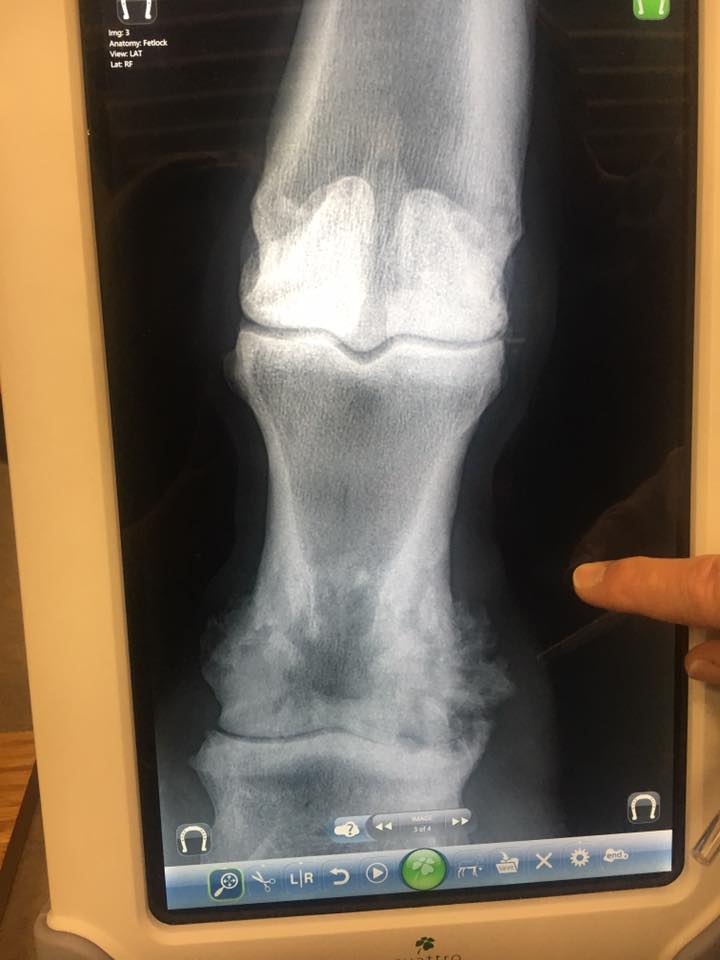 (18301939_10207879974512066_1722463992879041284_n.jpg) (18301939_10207879974512066_1722463992879041284_n.jpg)
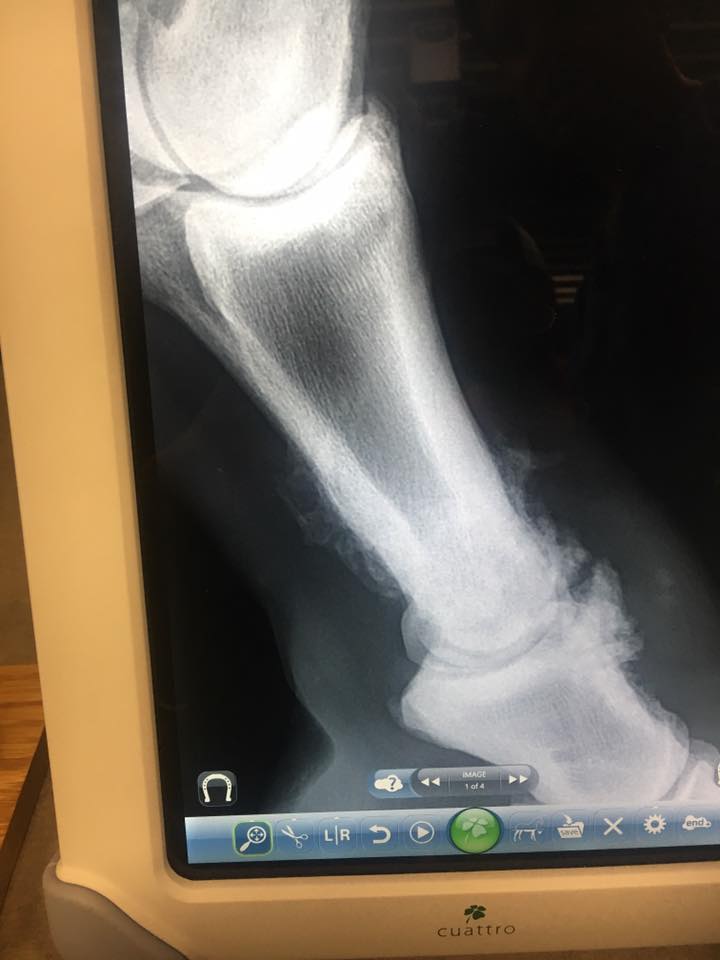 (18301538_10207879976592118_9115475876809521670_n.jpg) (18301538_10207879976592118_9115475876809521670_n.jpg)
Attachments
----------------
 18301939_10207879974512066_1722463992879041284_n.jpg (51KB - 300 downloads) 18301939_10207879974512066_1722463992879041284_n.jpg (51KB - 300 downloads)
18301538_10207879976592118_9115475876809521670_n.jpg (45KB - 205 downloads)
|
|
| |
|
I just read the headlines
Posts: 4483
 
| I would get with Dr. Schell on his secondvet forum or email him and talk to him about it. He and his daughter rehab OTTB so I am sure he will have some advice.
Also, you might email the crew at BioStar supplements, they have been helping me with some things with my horse.
Or, get a second opinion from a lameness expert vet, even if your's was one, too. |
|
| |
|
 Serious Snap Trapper
Posts: 4275
Location: In The Snow, AZ | I have no experience. But my friend just recently donated her mare to a facility to be a therapy horse. She was a bang up little barrel horse. I believe she is 13. She came up lame one day, diagnosed with ringbone after a few months off, and was told to retire her. |
|
| |
|
 Elite Veteran
Posts: 889

| I do not have experience with it, but I am sorry for your bad news. I think it would be absolutely worth it to get a second opinion. |
|
| |
|
 Good Grief!
Posts: 6343
 
Location: Cap'n Joan Rotgut.....alberta | My so's good head horse has low ringbone..its very noticeable to look at him..but we keep him injected and use previcox and hes good to go.....m |
|
| |
|
 My Heart Be Happy
Posts: 9159
Location: Arkansas | Bump |
|
| |
|
Expert
Posts: 1611
| That second x-ray looks painful poor dude. It is going to get progressively worse because it is past the point of being helped. You can inject and try osphos along with previcox to get a few more years of use outta him depending on how well you manage his pain and how much he tolerates it.
I don't agree with just retiring one as long as you can manage their problems and keep them pain free. |
|
| |
|
Extreme Veteran
Posts: 318
Location: Sapulpa, OK | Is it low ringbone or high? I had surgery done on my 5 yr old that had high ringbone back in Sept. of last year. The first few months I was pretty doubtfull about recovery, but it is almost completely fused now & she is doing amazing! Running, bucking, playing, & she is sound. |
|
| |
|
Extreme Veteran
Posts: 477
Location: Lost in the swamps | From the x ray this is high ringbone, a lot more favorable than low. Ive known a few horses with this and that joint can actually fuse. Because is a low motion joint. I know one barrel horse in particular that is still running in the 1-d with this and her x rays look similar. I also have a gelding that has mild signs of it we give him equioxx, and injections to help. He's still going. Google and read up on high ringtone in horses. |
|
| |
|
 It Goes On
Posts: 2262
Location: Muskogee, OK | The one nice thing about pastern joints is that you can fuse the joint and have a perfectly sound horse- this is because it is a very low motion joint.
Best chances at achieving full fusion is to surgically arthrodese the pastern- this is done under general anesthesia. They essentially debride all of the cartilage and then place a plate and screws to "fuse" the joint. You can expect the horse to need to be in a cast for atleast 4-6 weeks post surgery and then have a few months off after that but once the joint is fused these horses go on and function to a high athletic level- I've seen race horses go back and win races after a surgical pastern arthrodesis.
If that is not an option another option is chemical fusion where alcohol is injected into the joint to promote fusion- there is less success with this method as sometimes you cannot get complete fusion with it however this is an option.
How old is this horse? The one thing that would concern me with this horse is that he also appears to have fetlock proliferation- which could cause soreness in addition to the pastern joint, which if you fix the pastern you could still be left with a horse with fetlock pain that would need to be managed.
|
|
| |
|
Location: in the ozone | years ago, a friend had one & they did the technique that ..... can't think of the guy's name but he's well known for "natural balance" shoeing - that the shoer fitted a shoe to the horse's front foot. Then he cut a hard plastic pad out that was traced from the inside of the shoe and one from the outside. He screwed those 2 together & nailed that on the horse's foot. It gave the horse the ability to walk & stand in the position that it was comfortable but kept them from actually using the joint much, & it allowed it to fuse. Horse rode for many years after that. Wish I could remember more of it for help, just remember it seemed weird but horse did so well with it. Can't remember how long horse had to have that type of shoeing (no riding during this) but at least 6 mos. |
|
| |


 Folks on-line